


Simple Serial Dilution
Calhoun CLT 12,223 views 2:38. Simple Dilutions - Duration: 4:19. Courtney Harrington 3,704 views 4:19.
Putt-Putt Saves the Zoo Game Download free. Help Putt-Putt reunite baby animals with their parents Download Putt-Putt Saves the Zoo game free for PC. Download Putt Putt Saves the Zoo [Download] and play today. Things have gone wild. Putt-Putt and Pep need your child's help to reunite the little ones with their parents before Outback Al can open the gates. Along the way. Disney Mickey's Typing Adventure - Windows - Free 7-Day Trial [Download]. Disney Mickey's. 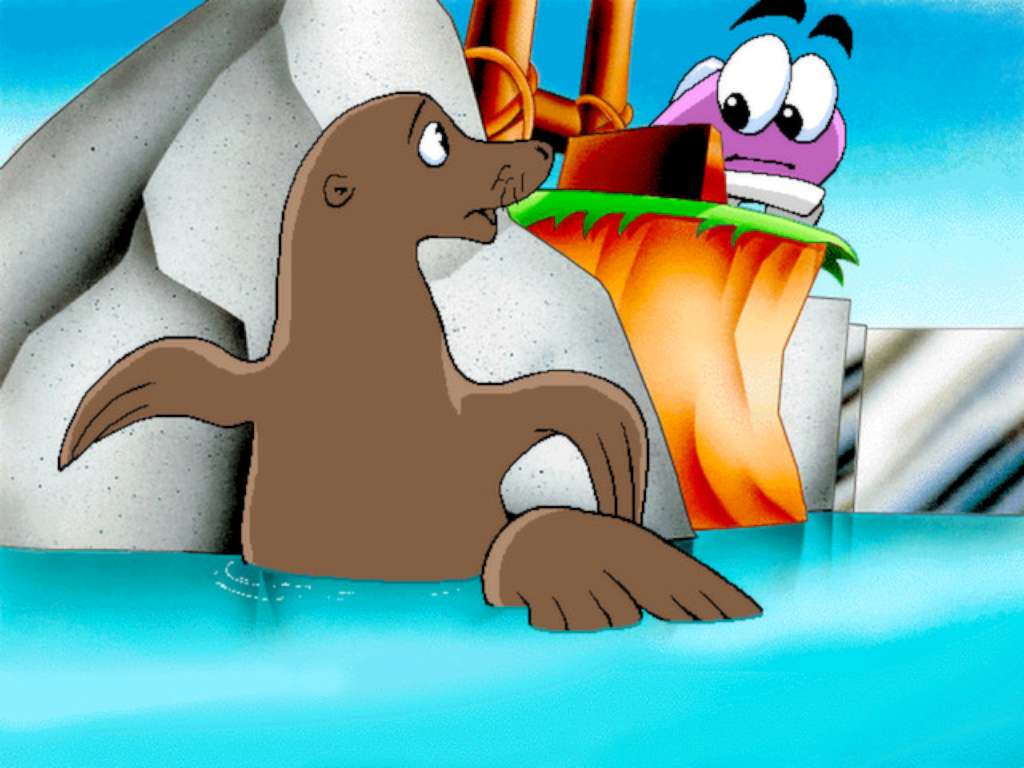 Today's the grand opening of the Cartown Zoo, and there's still so much to do: zoo chow is running low, and all the baby animals are missing. Free game downloads & online games at Big Fish Games - A new game every day! PC games & mac games - Play puzzle games, arcade games, mahjong games, card games, word games and more! Help Putt Putt find the missing baby animals so the zoo can open! Download a free trial, read about the game, and view player reviews.

A dilution solution contains solute (or stock solution) and a solvent (called diluent). These two components proportionally combine to create a dilution. You can identify a dilution solution by the amount of solute in the total volume, expressed as a proportion. For example, a chemical may be prepared in a 1:10 dilution of alcohol, indicating that a 10 mL bottle contains one milliliter of chemical and nine milliliters of alcohol. You can calculate the necessary volume of each component to prepare a dilution solution.
Serial Dilution Chemistry
Write down the desired final volume of the solution--for example, 30 mL.
Write down the desired dilution in the form of a proportion--for example, 1:20 dilution, also known as the dilution factor.
Convert the dilution factor to a fraction with the first number as the numerator and the second number as the denominator. For example, a 1:20 dilution converts to a 1/20 dilution factor.
Multiply the final desired volume by the dilution factor to determine the needed volume of the stock solution. In our example, 30 mL x 1 ÷ 20 = 1.5 mL of stock solution.
Subtract this figure from the final desired volume to calculate the volume of diluent required--for example, 30 mL - 1.5 mL = 28.5 mL.
Measure the amount of stock solution required -- in our example, 1.5 mL -- and dispense this into a large measuring cup.
Measure the amount of diluent required -- in our example, 28.5 mL -- and dispense this into the large measuring cup.
Mix the solution with the glass stirring rod. You now have your 1:20 dilution solution.
In chemistry and biology, the dilution ratio is the ratio of solute to solvent. It is often used for simple dilutions, one in which a unit volume of a liquid material of interest is combined with an appropriate volume of a solvent liquid to achieve the desired concentration. The diluted material must be thoroughly mixed to achieve the true dilution. For example, in a 1:5 dilution, with a 1:5 dilution ratio, entails combining 1 unit volume of solute (the material to be diluted) with 5 unit volumes of the solvent to give 6 total units of total volume.
This is often confused with 'dilution factor' which is an expression which describes the ratio of the aliquot volume to the final volume. Dilution factor is a notation often used in commercial assays. For example, in a 1:5 dilution, with a 1:5 dilution factor, (verbalize as '1 to 5' dilution) entails combining 1 unit volume of solute (the material to be diluted) with (approximately) 4 unit volumes of the solvent to give 5 units of total volume. Note that some solutions and mixtures take up slightly less volume than their components.
The dilution factor can be expressed using exponents: 1:5 would be 5e−1 (5−1 i.e. one-fifth:one); 1:100 would be 10e−2 (10−2 i.e. one hundredth:one), and so on.
There is often confusion between dilution ratio (1:n meaning 1 part solute to n parts solvent) and dilution factor (1:n+1) where the second number (n+1) represents the total volume of solute + solvent. In scientific and serial dilution assays, the given dilution factor often means the ratio to the final volume, not to just the solvent. The factors then can easily be multiplied to give an overall dilution factor. Some have suggested that dilution factors should more clearly be written as a/total or a þ b, as the use of the colon symbol ':' is widely used to represent ratios in fields like mathematics, chemistry, or organic chemistry. Leave ratios for actual ratios 1:100 = 101. However, at this time, both dilution conventions are widely used at this time -which is why it is important for laboratory personnel to always clarify whether a 'dilution ratio' or 'dilution factor' ought to be used in performing dilutions.
In analytical chemistry, dilution factor is always greater than 1 using equation [1] ,
[2]
or sometimes the inverse for other fields: [3]
In other areas of science such as pharmacy, and in non-scientific usage, a dilution is normally given as a plain ratio of solvent to solute. For large factors, this confusion makes only a minor difference, but in precise work it can be important to make clear which ratio is intended.
References[edit]
- ^'Dilution Factor Chemistry'.Cite web requires
website=(help) - ^'Dilution factor calculation'.Cite web requires
website=(help) - ^'Mathbench serial dilution'.Cite web requires
website=(help)

See also[edit]
