


Dc Comics The New 52 Fcbd Special Edition 1 Cbr Reader
- Dc Comics The New 52 Fcbd Special Edition 1 Cbr Reader 2017
- Dc Comics The New 52 Fcbd Special Edition 1 Cbr Readers
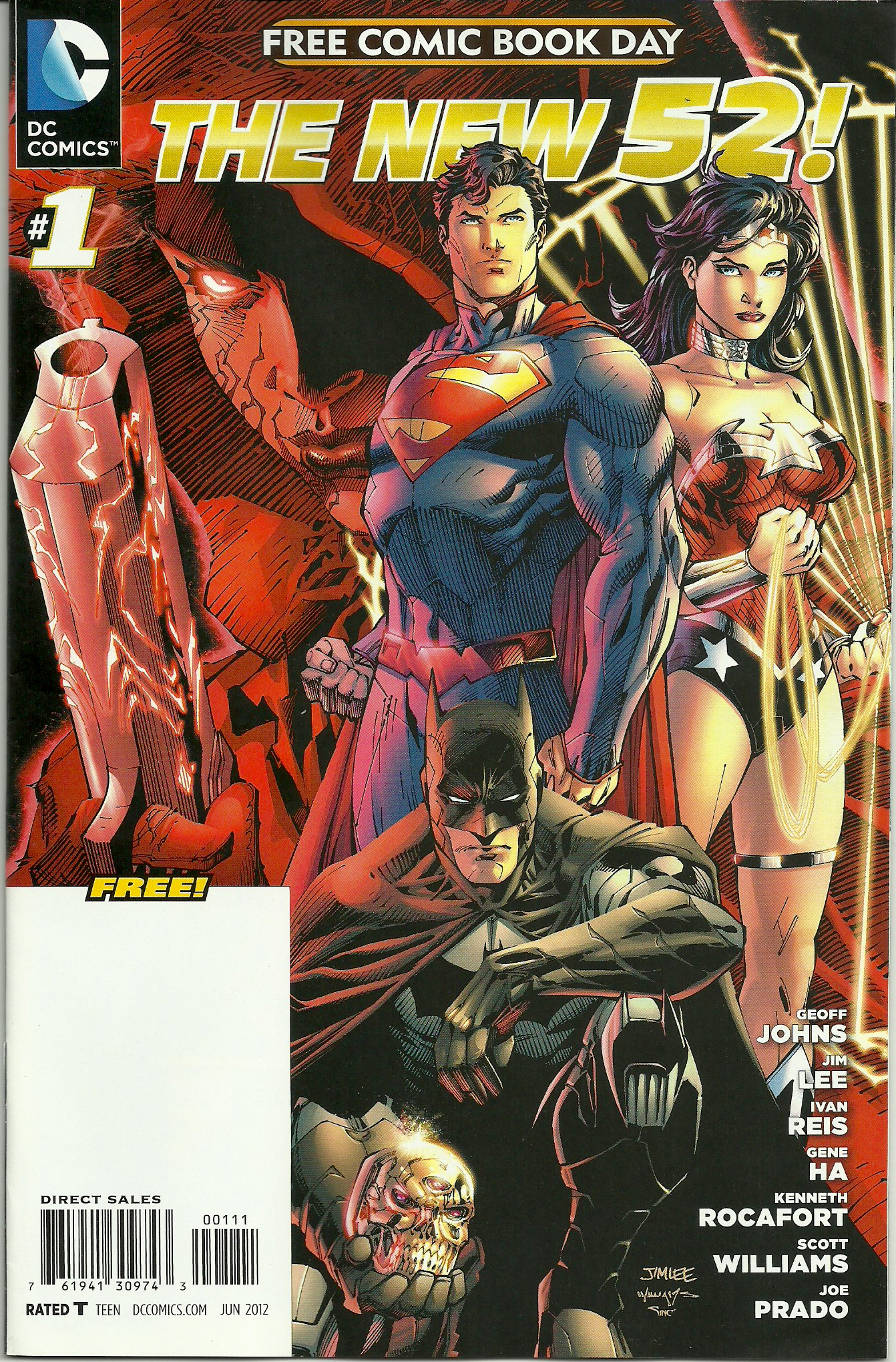
DC COMICS - THE NEW 52 FCBD SPECIAL EDITION #1 Writer: Geoff Johns. Penciller: Jim Lee, Ivan Reis, Kenneth Rocafort, Gene Ha. They really enjoy calling the Justice League “the world’s greatest super-heroes” in the New 52 DCU, don’t they? Steve Trevor and Etta Candy are doing their best West Wing impression. Select Chapter = ← → DC Comics The New 52 FCBD Special Edition.
| Phantom Stranger | |
|---|---|
Cover of The Phantom Stranger (Jan. 2013) #4. Art by Ethan Van Sciver. | |
| Publication information | |
| Publisher | DC Comics/Vertigo |
| First appearance | Phantom Stranger #1 (August–September 1952) |
| Created by | John Broome (writer) Carmine Infantino (artist) Sy Barry (inker) |
| In-story information | |
| Team affiliations | The Quintessence Justice League The Trenchcoat Brigade Sentinels of Magic Justice League Dark |
| Notable aliases | Philip Stark, Grey Walker, Brotherless One |
| Abilities | |
| The Phantom Stranger | |
| Series publication information | |
| Schedule | vol. 1 and 2: Bimonthly vol. 3 and vol. 4: Monthly |
| Format | All: Standard U.S., color. vol. 1, 2 and vol. 4: ongoing. vol. 3: Limited series |
| Publication date | vol. 1: August/September 1952 - June/July 1953 vol. 2: May/June 1969– February/March 1976 vol. 3: October 1987–January 1988 vol. 4: November 2012–October 2014 |
| Number of issues | vol. 1: 6 vol. 2: 41 vol. 3: 4 vol. 4: 23 (#1-22 plus issue #0) and a Trinity of Sin: The Phantom Stranger: Futures End one shot |
| Main character(s) | The Phantom Stranger |
The Phantom Stranger is a fictional superhero of unspecified paranormal origins, who battles mysterious and occult forces in various titles published by DC Comics, sometimes under their Vertigo imprint.
The Phantom Stranger made his first live appearance in the television series Swamp Thing for the DC streaming service played by Macon Blair.
- 2Fictional character biography
- 6In other media
Publication history[edit]
The Phantom Stranger first appeared in an eponymous six-issue comics anthology published in 1952 and created by John Broome and Carmine Infantino.[1] After an appearance in Showcase #80 (February 1969), he received another series beginning May–June 1969[2] that lasted until February–March 1976. The Showcase appearance and the first three issues of Phantom Stranger consisted of reprints from both the 1950s title and the 'Dr. 13: Ghost-Breaker' feature from the last nine issues of Star Spangled Comics at the same time, with new, brief framing sequences. These had Dr. Thirteen, certain that the Phantom Stranger was an impostor, determined to expose him. Beginning with issue #4 (November–December 1969), the series began featuring all-new material, with stories produced by Robert Kanigher, Len Wein, Jim Aparo, Neal Adams, Tony DeZuniga and others. In these stories, while the Stranger's past remained a mystery, the writers added a semi-regular cast of characters for him. A demonic sorceress named Tala[3] would become his major personal enemy; an alchemist/sorcerer named Tannarak[4] was first an enemy and would later assist him against the Dark Circle;[5] and a blind psychic named Cassandra Craft[6] would assist him. The stories hinted at a romantic attraction between the Stranger and Craft, but he eventually left her, deciding she could not be part of his life, convincing her he had been killed in their final battle against the Dark Circle.[7] She eventually learned differently and turned up occasionally. Doctor Thirteen, dropped along with the reprints, was given a back-up series here as of #12 (March–April 1971) which morphed into 'The Spawn of Frankenstein' in #23 (January–February 1973).
The Phantom Stranger is better known for his role as a supernatural assistant to other heroes, such as the Justice League. His status as either a full, reserve, or honorary member of the League is debatable. After a vote of the majority of the team in Justice League of America #103, they offered him membership, with Superman declaring the Stranger 'a member' without qualification, though he left before accepting. This issue was part of an unofficial metafictionalcrossover with Marvel Comics, spanning titles from both of the major comics companies. Beginning in Marvel's Amazing Adventures #16 (by Steve Englehart with art by Bob Brown and Frank McLaughlin), the story continued in DC's Justice League of America #103 (by Len Wein, Dick Dillin and Dick Giordano), and is concluded in Thor #207 (by Gerry Conway and penciler John Buscema). Each comic featured writers Steve Englehart, Gerry Conway, and Len Wein, as well as Wein's first wife Glynis, interacting with Marvel or DC characters at the Rutland Halloween Parade in Rutland, Vermont.[8][9][10] The Phantom Stranger has at least twice asserted his membership status when other Leaguers challenged his input, during the vote on the League's re-admission of Wonder Woman[11] and during the crossover with The Avengers.[12] In contrast, many in-story accounts of League membership fail to include the Stranger; when Zatanna was admitted as a member, Superman and Hawkman clarified that the 12-member limit in the League's charter had been rewritten previously to admit Hawkgirl as the 13th.[13] Writer Len Wein commented on the Phantom Stranger's relationship with the JLA in a 2012 interview stating that the character 'only sort of joined. He was offered membership but vanished, as per usual, without actually accepting the offer. Over the years, other writers have just assumed [he] was a member, but in my world, he never really said yes.'[14]
The Stranger also starred in a miniseries in 1987. This series portrayed him as an agent of the Lords of Order. They temporarily stripped the Stranger of his powers, due to his desire to continue a battle against the Lords of Chaos. This went against the wishes of the Lords of Order, who had believed a victory by darkness over light was necessary and preordained. This series featured Eclipso as an agent of Chaos; in Green Lantern/Superman: Legend of the Green Flame, this role is continued. However, the Stranger claims that he belongs to no group. The Lords of Order threaten to strip him of his powers, and he leaves, claiming that he shall continue to wander.[15]
The Phantom Stranger received a new ongoing series in September 2012 written by Dan DiDio and drawn by Brent Anderson.[16] This series was retitled as Trinity of Sin: The Phantom Stranger[17] as of issue #9 (Aug. 2013) and cancelled as of #22 (Oct. 2014).[18]
Fictional character biography[edit]
Origin[edit]
Unusual for a comic book character of such longevity, nothing in the way of personal data about the Phantom Stranger—his real name, his true nature, or his origins—has ever been revealed. DC produced a special issue of Secret Origins ((vol. 2) #10) that postulated four possible origins:
- In a variation of the Wandering Jew story, he was a man named Isaac with a wife (Rebecca) and a young son in Bethlehem during the time of Jesus' childhood. When King Herod heard that there was born a child who would be king of the Jews, he orders the Massacre of the Innocents in order to kill the Christ Child. Among the people killed were Isaac's wife and son. Blind with anger, he spends the next 30 years raging against Jesus. During the Passion of Jesus, Isaac bribes a guard to let him take his place and participate in the flagellation of Christ. Jesus condemns Isaac to 'tarry in this world - until I come again.' Centuries after the crucifixion, Isaac repents. He has spent his life helping mankind ever since, and in the present day (i.e., the late 1980s) politely declines an offer from God to release him from his penance.[19]
- The Stranger was a man in Biblical times who was spared God's wrath by an angel. Questioning God's actions, he commits suicide. The angel forbids his spirit from entering the afterlife, reanimates his body and condemns him to walk the world forever as part of humanity, but also forever separated from it. The angel also erases all of the man's memories of his past life. He then discovers his divine charge: to turn humanity away from evil, one soul at a time. Some versions of this story imply that the angel was the incarnation of the Spectre of that time period.[20]
- The Phantom Stranger is a being caught in a time loop. Near the end of the universe, the Phantom Stranger approaches a group of scientists who are trying to transfer energy from the Big Bang to extend the life of the universe. The Phantom Stranger realizes that one of the scientists is in reality an Avatar of Anti-Life, and that their efforts will prevent the universe from ever existing. The story concludes with the Phantom Stranger passing a portion of himself to a scientist, who dives through the portal to the Big Bang, intercepts the beam that would have drained the Big Bang, and becomes the Phantom Stranger, completing the cycle.[21]
- The Phantom Stranger was a fallen angel who sided with neither Heaven nor Hell during Satan's rebellion and thus was condemned to walk the Earth alone for all time.[22] In the comic book miniseries The Trenchcoat Brigade, John Constantine sees that the fourth origin story is essentially correct. Vertigo Visions: Phantom Stranger #1 by Alisa Kwitney and Guy Davis builds upon Moore's fallen angel story and adds the story of the woman Naamah, who was condemned to Hell for loving an angel. This angel is strongly hinted to have become the Phantom Stranger.
Another possible origin was hinted at in The Kingdom (the sequel to Kingdom Come) in which it was implied that Jonathan Kent, the future son of Superman and Wonder Woman, might grow up to be the Phantom Stranger. This also tied some of his abilities into the Hypertime concept, giving him the innate ability to enter alternate timelines and to exist in the spaces between them. The story ultimately revealed this to be a red herring. The character in question had been deliberately drawn in shadows to suggest that he was the Stranger; but when Wonder Woman finally saw his face, she said that she now realized he was not the Stranger they knew.
His appearances in titles featuring Doctor Fate reveal that the Stranger was a servant of the Lords of Order during the Ninth Age of Magic (at least). This may be a later development unrelated to his actual origin.
In Phantom Stranger (vol. 4) #0 (2012), the Phantom Stranger is Judas Iscariot. He is judged by the Circle of Eternity, who are implied to be proxies for a higher power. The Stranger is condemned to walk the Earth forever as an agent of God. He wears a necklace made of the 30 pieces of silver which he took as payment for betraying Jesus. When the Stranger facilitates the transformation of Jim Corrigan into the Spectre, one of the coins falls from the necklace and crumbles, bringing him one step closer to redemption.
Depictions by different writers[edit]
In his earliest appearances, the Phantom Stranger would prove supernatural events to be hoaxes perpetrated by criminals. He would directly confront the villains, and displayed no supernatural abilities apart from his uncanny ability to appear where and when he is needed and to disappear just as mysteriously, with nobody ever seeing him coming or going. In later stories, the supernatural events were real and the Phantom Stranger was given unspecified superhuman powers to defeat them. For example, he was able to control a smoke-based sedative with a gesture, claiming that smoke itself is his ally.[23]
In his second comic book series, the Phantom Stranger became a truly supernatural hero.
The Phantom Stranger played a major part in Neil Gaiman's The Books of Magic, taking protagonist Tim Hunter through time to show him the history and nature of magic. He has assisted the Justice League on numerous occasions, even being formally elected to the group in Justice League of America #103, although he did not acknowledge his membership until Justice League of America #143. The Stranger also had his own limited series, where, lacking much of his power, he tries to foil Eclipso's plan to cause a nuclear war.
During Kevin Smith's relaunch of Green Arrow, he prevented Hal Jordan from uniting the resurrected body of Oliver Queen with his soul in Heaven. This earned him Jordan's wrath; indeed, the Spectre threatened to judge the Stranger to see whether God had 'punished' him properly by refusing him access to Heaven itself. Nonetheless, the Phantom Stranger assisted Hal Jordan during his tenure as the Spectre on numerous occasions as well, most notably in a short stint babysitting Hal's niece, Helen.
In 2005's Day of Vengeance, the Phantom Stranger had been turned into a mouse by the Spectre. Upon the Spectre's confrontation and battle with the Stranger, the Stranger states: 'You can't kill me. I doubt that the Universe would allow it.' He was still able to advise Detective Chimp, however, who sheltered him in his hat while he regained his powers. He changed back using recovered energies in Day of Vengeance #6 and aided the Shadowpact, allowing them to see the battle between the Spectre and Shazam. The series makes a point that the supernatural community generally regards the Phantom Stranger as invincible. The first reaction of some characters to the Spectre's assault on magic is simply to presume that the Stranger will take care of it. Other stories have shown the Stranger to be nearly as powerful as the Spectre.
In Day of Vengeance: Infinite Crisis Special #1, the Phantom Stranger works with Nabu, Doctor Occult, Zatanna, the Shadowpact, and other mystics to re-form the Rock of Eternity and help defeat the maddened Spectre.
The Phantom Stranger's relationships with the other mystic heroes are usually a bit tense. The Stranger has no qualms gathering various forces in order to combat a certain evil (the Sentinels of Magic, but also other loose outfits), often invading those people's personal lives. However, he does not usually extend them that same courtesy. The Phantom Stranger has resisted such people as Doctor Fate (notably Hector Hall) in this, although Doctor Fate is, in almost any incarnation, an ally of the Stranger. Despite this, he does get along well with Zatanna; in Justice League of America #6, he appeared by her side to help remove the influence of Faust on the Red Tornado, and in the Justice series he seems to have a fatherly affection for her, calling her 'my dear'.
Since he is ultimately an unpredictable force, others often meet the Phantom Stranger's appearance with distrust. Nonetheless, most heroes will follow him, seeing not only his immense power, but also knowing that the Stranger is, in the end, a force for good. He has generally shown to side with humanity first in many supernatural-based problems, such as when he aided Superman in a confrontation with the magician Arion, who attempted to force Superman to retire in the belief that Superman and other alien heroes would hold back the 'darkness' that would make civilization—Arion describing human history as existing in a cycle that would allow humanity to develop to a certain point before they collapsed and had to start again—for so long that it would destroy humanity when it came; although the Stranger acknowledged that the future Arion had foreseen, where Earth was completely destroyed by the mysterious and powerful Khyber due to Superman delaying him for so long that he only struck at his peak, was possible, he also told Superman to keep fighting to find another way as the cost in souls and experience if Arion succeeded would be too great. A notable exception to the heroes who will work with the Stranger is Madame Xanadu, who has refused to join the Stranger on a few occasions, although she is a member of his Sentinels of Magic. Eventually, it was revealed that Madame Xanadu's hatred for the Phantom Stranger stems for his involvement in the events costing young Nimue her powers and heritage, and turning the young fey into the immortal yet powerless clairvoyant.
The Stranger also holds a unique relationship with the Spectre, as the two forces often come into conflict. He was responsible for gathering a group of mystic heroes in order to combat the Spectre, when its human host Jim Corrigan seemingly lost control of the Spectre (it was during this time that they destroyed the country of Vlatava). The Phantom Stranger participated in Jim Corrigan's funeral, when Corrigan's soul finally earned its rest and left the Spectre. The Stranger subsequently became one of the forces that stood against the Spectre when it went on a rampage without its human host, until the soul of Hal Jordan bonded with it. The Stranger occasionally took on an advisory role for this new Spectre. In Infinite Crisis #6, aware that the Spectre now has yet another new host, the Phantom Stranger gathered a large group of magic wielders in an unsuccessful attempt to solicit the Spectre's assistance in the Crisis.
In the Madame Xanadu series, the first encounter between the then-young and innocent Nimue, as Xanadu was known in the Arthurian Age, and the Phantom Stranger himself is told. There, Nimue acknowledges his unearthly nature, describing him as 'Ageless and yet so..uneasy', and claiming, 'You're not human! Nor are you of the Ancient Folk! Nor fey creature. Nor..nor demon..' However, before Nimue is able to grasp his nature, the Stranger goes away, claiming to be 'compelled to counsel and yet forbidden to interfere in the course of history.'[24]
In the pages of Shadowpact, the Phantom Stranger has adopted the role of narrator. He is shown to be aware of the mystical happenings, not only on Earth, but across several dimensions; once again he is shown to be unable to interfere, no matter how dire the danger that he is aware of may be.
Blackest Night[edit]
In Blackest Night #2, Black Hand refers to the Phantom Stranger as neither dead nor alive, meaning he cannot be killed, resurrected or raised as a Black Lantern. The Stranger watches as a black power ring attaches itself to Crispus Allen's body, turning him into a Black Lantern, and sealing the Spectre within him. In the tie-in one-shot revival of Phantom Stranger #42, the Stranger, with the help of Blue Devil, attempts to fight the Black Lantern Spectre, but fails. The two then travel to Nanda Parbat, where the Stranger helps Deadman remove the black ring from his body. The Stranger has the body brought into Nanda Parbat and placed under guard, stating that it is of 'singular importance'.
The New 52[edit]
In DC Comics - The New 52 FCBD Special Edition #1 as part of The New 52 (a reboot of the DC Comics universe), the Phantom Stranger was implied to be Judas Iscariot and part of the Trinity of Sin with Pandora and the Question. While not named explicitly, the necklace he wears is presumed to be made from the 30 pieces of silver that he received for his betrayal of Jesus Christ. His hair and eyes become totally white from the experience.[25]
In Phantom Stranger (vol. 4) #0, it is confirmed that Phantom Stranger was once known as Judas Iscariot, the man who betrayed Jesus. In this origin tale he is about to hang himself when his suicide attempt is stopped by a mysterious group of individuals. He is subsequently judged along with Pandora of Pandora's Box fame and another man who was turned into the Question. Thousands of years later, he is guided to help desperate former detective Jim Corrigan find his kidnapped girlfriend. He leads him to the abandoned warehouse where she has been kept, but this turns out to be a trap. Corrigan is killed by the kidnappers, then transforms into the Spectre and accuses the Stranger of betraying him. As the Spectre is about to attack the Stranger, a mysterious Voice sends him off to inflict his wrath on the more deserving. As payment for what occurred with Corrigan, one coin drops off the necklace he was cursed with (made of the 30 pieces of silver he betrayed Jesus for) and the Stranger realizes he has more encounters ahead of him before he is forgiven.[26]
Pandora meets the Phantom Stranger and tells him she needs his help to find the person who can open her box. He refuses, reminding her of the last time the box was opened, when the sins of the world were unleashed. To this, she responds that she only wants to save everyone from what she unleashed.[27]John Constantine tries to con the Phantom Stranger to join the Justice League Dark by promising to return one of the 30 silver coins bound to him through his punishment. The Phantom Stranger rejects the offer, but Constantine feels he will eventually come around and be on the Justice League Dark's side.[28] The Question manipulates Doctor Thirteen to impale the Phantom Stranger with the Spear of Destiny.[29] The Phantom Stranger is left on the door to the House of Mystery, and the Justice League Dark attempt to revive him, summoning the Nightmare Nurse.[30] Once they do revive him, the Phantom Stranger states that they are all in his debt and asks the Justice League Dark (specifically Zatanna) to help him enter Hell in order to save his family.[31]Zauriel warns the Phantom Stranger that he is never allowed to enter Heaven again, having gone to Hell to try to save his family. Zauriel also states to the Phantom Stranger that if he tries, he will be erased from time and history forever.[32]
Powers and abilities[edit]
The natures of these are as mysterious as the Stranger himself, who seems to be effectively immortal, never aging. The Phantom Stranger has demonstrated enormous powers and capabilities, the exact origin of which is undetermined. He can travel enormous distances in a very short period of time, such as to the JLA Watchtower and Apokolips, as well as to mystical dimensions, such as Heaven, Hell and the realm occupied by the Quintessence (although he is forbidden from entering Heaven directly). He can fire energy bolts of great force, travel through time, dispel magic, reveal illusions, and survive in space without any type of life support system; on one occasion, he created a mystical shield that protected Superman from any spells cast against him directly in preparation for Superman's upcoming confrontation with Arion. The limits of his power have not been defined. In many cases, despite his obvious capabilities, he claims he is not allowed to end a crisis directly, only to guide others to take the necessary actions (this restriction allows the Stranger to guest-star in virtually any title without becoming a deus ex machina, whose actions would immediately end the story).
The Phantom Stranger's greatest and most well-known power is his mysterious omniscience; he seems to know nearly everything about any character and situation he encounters in the DC Universe, and in the JLA/Avengers crossover, this extends to the Marvel Universe as well for the sake of the story; this is, however, disproved in Swamp Thing Annual #2. This allows him to provide helpful advice and assistance to others. He claims that 'nothing remains hidden to [him].' His knowledge has even allowed him to come to the aid of DC Universe characters trapped out of their own times. In Animal Man #19, Animal Man had found himself trapped in the 1960s in a ghost-like state in between reality and non-reality. He wandered listlessly, until the Stranger met him and offered a helping hand. The Stranger was already aware of Animal Man's current state of despair, and even knew that he was from the future (i.e. the late 1980s). However, in Swamp Thing Annual #2, the Stranger was not completely aware of all the details of Alec Holland's transformation into the Swamp Thing; he knew enough to be aware of the swamp creature's existence and life, but was still surprised when he encountered the creature's astral body on a trip through the afterlife.
Although the Phantom Stranger does not wear a mask, the shadow of his hat almost constantly cloaks his eyes. When shown unmasked in the Madame Xanadu miniseries, set in the Arthurian age where the Stranger's disguise was a simple cloak, his eyes appear as white and devoid of irises and pupils even in broad light, and his eyes sunken in a gaunt, sad visage, thus perpetuating the shadowy look around them.
Other versions[edit]
In DC: The New Frontier #6, the Phantom Stranger calls several magic-based heroes to a banquet on the Moon, where he counsels them not to interfere in the new heroes' battle with the Center.
Collected Editions[edit]
- Showcase Presents: Phantom Stranger Vol. 1 collects Showcase #80 and Phantom Stranger vol. 2 #1-21, 544 pages, October 2006, ISBN978-1401210885
- Showcase Presents: Phantom Stranger Vol. 2 collects Phantom Stranger vol. 2 #22-41, Justice League of America #103, House of Secrets #150, The Brave and the Bold #89, 98 and the Frankenstein stories from Phantom Stranger vol. 2 #23-30, 552 pages, March 2008, ISBN978-1401217228
- Blackest Night: Rise of the Black Lanterns includes Phantom Stranger vol. 2 #42, 256 pages, July 2011, ISBN978-1401228064
- Trinity of Sin: Phantom Stranger Vol. 1: A Stranger Among Us collects Phantom Stranger vol. 4 #0-5, 144 pages, June 2013, ISBN978-1401240882
- Trinity of Sin - The Phantom Stranger Vol. 2: Breach of Faith collects Phantom Stranger vol. 4 #6-8 and Trinity of Sin: Phantom Stranger #9-11, 144 pages, March 2014, ISBN978-1401247140
- Trinity of Sin - Phantom Stranger Vol. 3: The Crack in Creation collects Trinity of Sin: Phantom Stranger #12-22 and Trinity of Sin: Futures End #1, 264 pages, January 2015, ISBN978-1401250966
In other media[edit]
Television[edit]
- The Phantom Stranger appears in the Batman: The Brave and the Bold episode 'Chill of the Night!', voiced by longtime Batman voice actor Kevin Conroy.[33] He and the Spectre observe Batman as he learns who murdered his parents. The Stranger wagers that Batman will remain on the path of justice, while the Spectre wagers that Batman will choose the path of vengeance and murder Joe Chill.
- Macon Blair makes a live-action appearance as the Phantom Stranger in the 2019 TV series Swamp Thing episode 'Drive All Night'.[34] He meets the Swamp Thing and tells him that the ghosts that he saw earlier were in fact events witnessed by the trees in the past. In the episode 'The Price You Pay', it was revealed that Daniel Cassidy made a deal with the Phantom Stranger where it prevents him from leaving Marais. In the episode 'The Anatomy Lesson', the Phantom Stranger shows a recovering Daniel a vision of Abby Arcane and Liz Tremayne being attacked by the Conclave's security force. This leads to Daniel becoming Blue Devil and helping them out.
Video games[edit]
- The Phantom Stranger appears in DC Universe Online. He introduces magical heroes to Exobyte Research and equipment modification in the JLA Watchtower.
- The Phantom Stranger appears in the mobile game DC Legends as a non-player character.
Music[edit]
- The song 'Return of the Phantom Stranger' appears on Rob Zombie's Hellbilly Deluxe (1998) album.
Miscellaneous[edit]
Bruce Timm had intended to utilize the Phantom Stranger in the DC animated universe, but he was not allowed to do so. However, his design for the character did appear in the following DC comics:
- Batman: Gotham Adventures #33 (he shows Bruce Wayne what Gotham City would be like without Batman)
- Justice League Adventures #31 (he shows three possible fates about a boy who is mourning his family)
- Justice League Unlimited #14 (he helps Deadman and some other Justice Leaguers against a magical threat)
- Justice League Unlimited #28 (he shows the Flash several Christmas Days that Batman experienced in the past in order to give the speedster a deeper understanding of Batman's psyche)
References[edit]
- ^Irvine, Alex; Dolan, Hannah, ed. (2010). '1950s'. DC Comics Year By Year A Visual Chronicle. London, United Kingdom: Dorling Kindersley. p. 69. ISBN978-0-7566-6742-9.
In his first series, the Phantom Stranger often made his appearances to debunk supernatural-seeming events, and the inaugural issue established this theme from the outset with stories..from writer John Broome and artist Carmine Infantino.
CS1 maint: extra text: authors list (link) - ^McAvennie, Michael '1960s' in Dolan, p. 133: 'Sixteen years after he faded into obscurity, the Phantom Stranger rematerialized in Showcase #80 (February 1969) before making his way back into his own series.'
- ^Kanigher, Robert (w), Adams, Neal (p), Draut, Bill (i). 'There Is Laughter in Hell This Day!' Phantom Stranger v2, #4 (November–December 1969)
- ^Conway, Gerry (w), Aparo, Jim (p), Aparo, Jim (i). 'Death.. Call Not My Name!' Phantom Stranger v2, #10 (November–December 1970)
- ^Kanigher, Robert; Wein, Len (w), Aparo, Jim (p), Aparo, Jim (i). 'A Child Shall Lead Them!' Phantom Stranger v2, #20 (July–August 1972)
- ^Wein, Len (w), Aparo, Jim (p), Aparo, Jim (i). 'Like a Ghost from the Ashes' Phantom Stranger v2, #17 (January–February 1972)
- ^Wein, Len (w), Aparo, Jim (p), Aparo, Jim (i). 'Apocalypse' Phantom Stranger v2, #24 (March–April 1973)
- ^Larnick, Eric (October 30, 2010). 'The Rutland Halloween Parade: Where Marvel and DC First Collided'. ComicsAlliance. Archived from the original on January 11, 2012. Retrieved December 5, 2011.Cite uses deprecated parameter
deadurl=(help); Cite web requireswebsite=(help) - ^Cronin, Brian (October 1, 2010). 'Comic Book Legends Revealed #280'. Comic Book Resources. Archived from the original on January 16, 2012. Retrieved December 5, 2011.Cite uses deprecated parameter
deadurl=(help); Cite web requireswebsite=(help) - ^'Amazing Adventures #16 (Jan. 1973)'. Grand Comics Database.Cite web requires
website=(help)
'Justice League of America #103 (Dec. 1972)'. Grand Comics Database.Cite web requireswebsite=(help)
'Thor #207 (Jan. 1973)'. Grand Comics Database.Cite web requireswebsite=(help) - ^Pasko, Martin (w), Delbo, José (p), Blaisdell, Tex (i). 'Will the Real Wonder Woman Please..Drop Dead!' Wonder Woman #222 (February–March 1976)
- ^Busiek, Kurt (w), Pérez, George (p), Pérez, George (i). 'Book Three: Strange Adventures' JLA/Avengers #3 (December 2003)
- ^Conway, Gerry (w), Dillin, Dick (p), McLaughlin, Frank (i). 'The Reverse-Spells of Zatanna's Magic' Justice League of America #161 (December 1978)
- ^Riley, Shannon E. (August 2012). 'Flashback: 22,300 Miles Above Earth A Look Back at the JLA's 'Satellite Years''. Back Issue!. Raleigh, North Carolina: TwoMorrows Publishing (#58): 14.
- ^Greenberger, Robert (October 2016). 'The Paul Kupperberg Phantom Stranger Interview'. Back Issue!. Raleigh, North Carolina: TwoMorrows Publishing (#92): 44–50.
- ^Rogers, Vaneta (June 8, 2012). 'DC Adds Four to New 52, Including DiDio's Phantom Stranger'. Newsarama. Archived from the original on June 11, 2012. Retrieved June 10, 2012.
Written by [Dan] DiDio with art by Brent Anderson, The Phantom Stranger will spin out of the character's recent appearances in Justice League and DC's Free Comic Book Day story.
Cite uses deprecated parameterdeadurl=(help); Cite web requireswebsite=(help) - ^Trinity of Sin: The Phantom Stranger at the Grand Comics Database
- ^Ching, Albert (May 19, 2014). 'Six DC Titles to End in August, Including Birds of Prey and Superboy'. Comic Book Resources. Archived from the original on October 4, 2014.Cite uses deprecated parameter
deadurl=(help); Cite web requireswebsite=(help) - ^Barr, Mike W. (w), Aparo, Jim (p), Aparo, Jim (i). 'Tarry 'Till I Come Again' Secret Origins v2, #10 (January 1987)
- ^Levitz, Paul (w), García-López, José Luis (p), García-López, José Luis (i). 'And Men Shall Call Him Stranger' Secret Origins v2, #10 (January 1987)
- ^Mishkin, Dan (w), Colón, Ernie (p), Marcos, Pablo (i). 'Revelations' Secret Origins v2, #10 (January 1987)
- ^Moore, Alan (w), Orlando, Joe (p), Orlando, Joe (i). 'Footsteps' Secret Origins v2, #10 (January 1987)
- ^Haney, Bob (w), Andru, Ross (p), Esposito, Mike (i). 'Arise Ye Ghosts of Gotham' The Brave and the Bold #89 (April–May 1970)
- ^Wagner, Matt (w), Reeder Hadley, Amy (p), Reeder Hadley, Amy (i). 'War. Ancient scourge of mankind, of prosperity, of life itself' Madame Xanadu v2, #2 (September 2008)
- ^Johns, Geoff (w), Reis, Ivan (p), Prado, Joe (i). 'There was a time when man first discovered magic' DC Comics - The New 52 FCBD Special Edition #1 (May 2012)
- ^DiDio, Dan (w), Anderson, Brent (p), Hanna, Scott (i). 'A Stranger Among Us' Phantom Stranger v4, #0 (November 2012)
- ^DiDio, Dan (w), Anderson,Brent (p), Tan, Philip (i). 'Visitations' Phantom Stranger v4, #2 (January 2013)
- ^DiDio, Dan; DeMatteis, J. M. (w), Anderson,Brent (p), Tan, Philip; Hunter, Rob (i). 'Abduction' Phantom Stranger v4, #4 (March 2013)
- ^DiDio, Dan; DeMatteis, J. M. (w), Cannon, Zander; Ha, Gene (p), Ha, Gene; Pepoy, Andrew (i). 'Breach of Faith' Phantom Stranger v4, #7 (June 2013)
- ^DiDio, Dan; DeMatteis, J. M. (w), Tan, Philip (p), Paz, Jason (i). 'Sins' Phantom Stranger v4, #8 (July 2013)
- ^DeMatteis, J. M. (w), Blanco, Fernando (p), Blanco, Fernando (i). 'Burning Bright' Trinity of Sin: The Phantom Stranger #9 (August 2013)
- ^DeMatteis, J. M. (w), Blanco, Fernando (p), Blanco, Fernando (i). 'Paradise Found' Trinity of Sin: The Phantom Stranger #10 (September 2013)
- ^Chang, Michael (director); Dini, Paul (writer) (April 9, 2010). 'Chill of the Night!'. Batman: The Brave and the Bold. Season 2. Episode 11. Cartoon Network.
- ^Byrne, Craig (September 6, 2018). 'DC Comics' Phantom Stranger Is In Swamp Thing Episode 5'. KSiteTV. Retrieved June 25, 2019.
Dc Comics The New 52 Fcbd Special Edition 1 Cbr Reader 2017
External links[edit]
- The Phantom Stranger at the Grand Comics Database
- The Phantom Stranger vol. 2 at the Grand Comics Database
- The Phantom Stranger vol. 3 at the Grand Comics Database
- 'Phantom Stranger (Vertigo special)'. Grand Comics Database.Cite web requires
website=(help)
| The New 52 | |
|---|---|
| Publication information | |
| Publisher | DC Comics |
| Genre | |
| Publication date | August 31,2011 – May 25,2016 |
| Main character(s) | DC Universe |
| Creative team | |
| Written by | Various |
| Artist(s) | Various |
| Collected editions | |
| DC Comics The New 52 | ISBN978-1-4012-3451-5 |
| DC Comics The New 52 Zero Omnibus | ISBN978-1-4012-3884-1 |
| DC Comics The New 52 Villains Omnibus | ISBN978-1-4012-4496-5 |
The New 52 was the 2011 revamp and relaunch by DC Comics of its entire line of ongoing monthly superhero comic books. Following the conclusion of the 'Flashpoint' crossover storyline, DC cancelled all of its existing titles and debuted 52 new series in September 2011 with new first issues.[1] Among the renumbered series were Action Comics and Detective Comics, which had retained their original numbering since the 1930s.
The relaunch included changes to the publishing format; for example, print and digital comics began to be released on the same day. New titles were released to bring the number of ongoing monthly series to fifty-two. Various changes were also made to DC's fictional universe to entice new readers, including changes to DC's internal continuity to make characters more modern and accessible. In addition, characters from the Wildstorm and Vertigo imprints were absorbed into the DC Universe.[2][3]
The New 52 branding ended after the completion of the 'Convergence' storyline in May 2015, although the continuity of The New 52 continued. In June 2015, 24 new titles were launched, alongside 25 returning titles, with several of those receiving new creative teams. In February 2016, DC announced their Rebirth initiative with the release of an 80-page one-shot on May 25, 2016, and continuing through late 2016.
- 1Publication history
- 2Multiversity and Convergence: the return of hypertime and the Pre-Crisis multiverse
- 4Publications
- 5Reception
- 6Criticism
- 6.2Portrayal of female characters
Publication history[edit]
Launch and Second Wave[edit]
Following the conclusion of the Flashpoint limited series, all titles set in the DC Universe were cancelled and relaunched with new #1 issues.[4] The new continuity features new outfits and backstories for many of DC's long-established heroes and villains. An interview with DC Comics executive editor Eddie Berganza and editor-in-chief Bob Harras revealed that the new continuity did not constitute a full reboot of the DC Universe but rather a 'soft reboot'.[citation needed] While many characters underwent a reboot or revamp, much of the DC Universe's history remained intact. Many major storylines such as 'War of the Green Lanterns', 'Batman: A Death in the Family' and Batman: The Killing Joke remained part of the new continuity, while others have been lost in part or in whole.[5] DC editorial constructed a timeline that details the new history and which storylines to keep or ignore.[5]
On August 31, 2011, Midtown Comics Times Square held a midnight event at which they began selling Justice League #1 and Flashpoint #5. On hand to sign the books were DC Chief Creative Officer Geoff Johns, who was the writer of both titles, and Co-publisher and writer/artist Jim Lee, who illustrated Justice League.[1][6]
On January 12, 2012, DC announced that after their eighth issues, Blackhawks, Hawk and Dove, Men of War, Mister Terrific, O.M.A.C., and Static Shock would be cancelled and replaced with six new titles, which would reveal more of The New 52 DC Universe.[7] The new titles were dubbed the Second Wave: Dial H, Earth 2, G.I. Combat, World's Finest, Ravagers and Batman Incorporated, which was absent from the initial line of Batman titles, and would continue Grant Morrison's storyline from before The New 52 involving the conflict between Batman and Talia al Ghul.[8]
'Zero Month' and continued title changes[edit]
On June 8, 2012, DC announced that in September 2012, the first anniversary of The New 52 launch, all titles would get a zero issue, dubbed 'Zero Month'.[9] In addition, the Third Wave of titles was announced: Talon, Sword of Sorcery, Phantom Stranger, and Team 7. With these additions to the line, Justice League International, Captain Atom, Resurrection Man, and Voodoo were cancelled.[10]
In October and November 2012, DC announced new titles Threshold,[11]Justice League of America,[12]Katana, Justice League of America's Vibe,[13] and Constantine.[14]Threshold would be published in January 2013, Constantine in March 2013, while the others would be published in February 2013. DC later consolidated these new titles as the Fourth Wave of The New 52.[15]G.I. Combat, Frankenstein, Agent of S.H.A.D.E., Grifter, Blue Beetle, and Legion Lost were cancelled as a result.[16]Young Romance: A New 52 Valentine's Day Special #1 was published as the 52nd title in February 2013.[15]
In January 2013, DC Comics announced the cancellation of I, Vampire and DC Universe Presents in April 2013.[17] To celebrate the 60th birthday of Mad Magazine mascot Alfred E. Neuman, DC solicited variants drawn by Mad artists for 13 titles being published in April 2013.[18]
Starting with titles released on January 28, 2013, all printed New 52 publications featured advertisements for fictional news channel, Channel 52. The two page back-ups, titled Channel 52, appear in all books, starting in February 2013, and replaced the previous 'DC Comics: All Access' features. This news feature stars Bethany Snow, Ambush Bug, Vartox, and Calendar Man as reporters and anchors on the fictional in-universe news show. The art is provided by Freddie E. Williams II.[19] Each week brings new content regarding the current or future goings-on in the DC universe. Channel 52 and Bethany Snow make an appearance in the second season of Arrow.[20]
On January 30, 2013, DC announced that all titles released in April 2013 would be 'WTF Certified'. Each title would feature a gatefold cover and story lines and moments that will leave readers in a state of shock, including the return of Booster Gold.[21][22] However, DC later dropped the 'WTF Certified' branding and did not feature it on any of The New 52 books.[23] In February 2013, it was announced that DC Comics would launch two new politically motivated books as parts of the Fifth Wave: The Green Team: Teen Trillionaires and The Movement. These would explore concepts similar to the Occupy Movement and the role money has in a world of superheroes.[24] A wave of cancellations was also announced for May 2013 including: The Savage Hawkman, The Fury of Firestorm: The Nuclear Man, Sword of Sorcery, Team 7, Deathstroke, and The Ravagers.[25]
In March 2013, DC announced that it would launch four new titles in June 2013, making up the rest of the Fifth Wave: Superman Unchained, Batman/Superman, Larfleeze and Trinity of Sin: Pandora.[26] In April 2013, the cancellation of Batman Incorporated was announced for July 2013. DC also solicited two director's cut one-shots for the Superman Unchained book and the 'Batman: Zero Year' story arc.[27] In May 2013, it was announced that Batman Incorporated Special #1 would be published to finish off the Batman Incorporated series in August 2013.[28] Another director's cut one-shot was solicited for the 'Trinity War' story arc, along with the cancellations of Demon Knights, Legion of Super-Heroes, Threshold and Dial H.[29]
'Villains Month', 'Forever Evil' and 'Zero Year'[edit]
In June 2013, DC announced that all titles in September 2013 would be 'relaunched' as a #1, featuring a villain from that respective book, as part of 'Villains Month'. For example, Detective Comics, which would have published issue 24 in September, would be released as Detective Comics #23.1 and Poison Ivy #1, with the issue being known by both titles.[30] It was the first major crossover in the New 52 since 'Flashpoint' and spun out of the aftermath of 'Trinity War'. Each book featured 3Dlenticular front and back covers.[31] DC also released 2D versions of the covers.[32] Some books published multiple 'Villains Month' issues, while others skipped publication in September 2013. For example, Batman, Superman, and Justice League are some of the titles that published four issues, while The Flash published three issues, Aquaman and others published two issues, and Green Arrow and others published only one.[31][33]
In addition to 'Villains Month', a seven-issue limited series titled Forever Evil, by Geoff Johns and David Finch, launched in September 2013 and focused on the Crime Syndicate, an evil version of the Justice League from Earth-3 in the Multiverse, as they attempt to take over Prime Earth in the Justice Leagues' defeat at the end of 'Trinity War'.[34] The 'Forever Evil' event ran in other titles starting in October 2013, including three 6-issue tie-in books that launched: Forever Evil: Rogues Rebellion by Brian Buccellato and Patrick Zircher; Forever Evil: Arkham War by Peter Tomasi, Scot Eaton and Jaime Mendoza; and Forever Evil: A.R.G.U.S. by Matt Kindt and Manuel Garcia.[35] Other tie-in titles included: Teen Titans, Suicide Squad, Justice League, Justice League of America and the 'Forever Evil: Blight' storyline in Constantine, Justice League Dark, Trinity of Sin: Pandora, and Trinity of Sin: The Phantom Stranger.[35][36]Forever Evil #1 was also reprinted in a director's cut one-shot in October 2013.[35]
It was also announced in June 2013 that the 'Batman: Zero Year' storyline in Batman would spin off into an event during November 2013, which would include other titles outside the 'Batman' line of titles.[37] The event, initially conceptualized to tell Batman's origin in The New 52,[38] was featured in issue #25 of Action Comics, The Flash, Green Arrow, and Green Lantern Corps, along with Batgirl, Batwing, Batwoman,[39]Birds of Prey, Catwoman, Detective Comics, Nightwing, and Red Hood and the Outlaws in the 'Batman' line.[40][41] The various books explored their characters' connections to Gotham City, and their first encounters with Batman.
On June 17, 2013, DC announced two new titles, Justice League 3000[42] and Superman/Wonder Woman as the first titles of the Sixth Wave,[43] which began publication in October 2013. On July 16, 2013, DC announced Harley Quinn, the third and last title of the Sixth Wave, which began publication in November 2013.[44][45] In August 2013, it was announced that Justice League 3000's initial publication would be delayed to December 2013, following creative changes on the title.[46]
Launch of weeklies and start of 'second phase'[edit]
In October 2013, DC announced Batman Eternal, a weekly year-long series which would feature Batman, his allies, and others in Gotham City.[47] It was announced in January 2014 that the series would begin in April of that year.[48] The cancellation of Katana and Justice League of America's Vibe was also announced, with the titles' final publication in December 2013, while Green Team: The Teen Trillionaires would end in January 2014.[49] Following the release of Scribblenauts Unmasked: A DC Comics Adventure, DC announced cover variants for 20 titles published in January 2014, featuring Scribblenauts-inspired artwork.[50]
In November 2013, DC announced one-shot issues Superman: Lois Lane #1 and Batman: Joker's Daughter #1 for February 2014, featuring Lois Lane and the new Joker's Daughter, respectively.[51] DC also announced that 20 titles being published in February 2014 would feature steampunk-inspired cover variants.[52] As well, Johns revealed that the end of 'Forever Evil' in March 2014 would mark the end of the first phase of The New 52, with a new phase starting in April 2014, 'one that will see the introduction, and re-introduction, of a lot of characters, concepts and a decidedly new center to the DC universe.'[53]
In December 2013, it was announced that another weekly year-long series titled The New 52: Futures End would begin publication in May 2014, with a free zero issue for Free Comic Book Day. The series would be set 5 years in the New 52's future. Co-writer Jeff Lemire stated that the series was 'an exploration of DC's past, present and its future.' Batman Beyond made his New 52 debut in the series.[54] Solicitations published in December 2014 also revealed that 22 titles to be published in March 2014 would feature variant covers based on Robot Chicken, to promote the second Robot Chicken DC Comics Special.[55][56]
In January 2014, DC announced Aquaman and the Others, Justice League United, Secret Origins and Sinestro ongoing series and Forever Evil Aftermath: Batman vs Bane #1 for publication in April 2014. In addition, DC revealed that Justice League of America, Nightwing, Stormwatch, Suicide Squad, Superman Unchained, and Teen Titans would end in April 2014.[48] It was also announced that April 2014 publications would feature a second wave of variant covers inspired by MAD magazine.[57]
In February 2014, Gail Simone revealed that her series The Movement would be canceled in May 2014 after 12 issue.[58] It was also revealed that 19 titles published in May 2014 would feature variant covers drawn by Mike Allred in the style of Batman '66.[59] A one-shot issue, Superman: Doomed #1 would also be published in May, as a tie-in to a crossover story arc of the same name.[60]
DC later announced that as part of the celebration of The New 52's third anniversary, all ongoing titles published in September 2014 would feature stories that tied into The New 52: Futures End.
'These stories aren't going to just be tied into the weekly. But what you'll be seeing is a lot of the writers who are working on series right now projecting forward—their ideas, their storylines, where they think their character might be five years from now. [..] The [lenticluar 3D] covers now will also have the ability to have a 'flicker' effect. That means that the images change and show the transformation going on.. There is a level of change that is taking place with our characters during the course of this story.
DiDio said that new ongoing titles would launch in June and July to be included in the event.[61] Following the month of tie-ins, a third weekly titled Earth 2: World's End launched in October 2014. This title is set in the present DC Universe on Earth 2, while showcasing the events and circumstances that lead to the future depicted in Futures End.[62][63]
In March 2014, DC announced the launch of Infinity Man and the Forever People, the one-shot Harley Quinn Director's Cut #0, and the cancellation of Larfleeze for June 2014.[64] March also saw the announcement of variant covers for 20 titles in June 2014, based on the DC Collectibles 'Bombshells' statue line designed by Ant Lucia, the covers feature retro and pinup versions of female characters.[65] DC also revealed two new publications for July 2014: an ongoing series Star-Spangled War Stories and a one-shot Harley Quinn Invades San Diego Comic-Con.[66]
The Multiversity, new titles, new creative teams and DC You[edit]
In April 2014, DC announced Suicide Squad and Teen Titans would be relaunched in July 2014, with the former being retitled New Suicide Squad.[67][68] A new series, titled Grayson, focusing on character Dick Grayson following his role in Forever Evil,[69] and a one-shot issue Robin Rises: Omega, tied into the Batman and Robin storyline 'The Hunt for Robin', would also debut.[70] It was revealed that July 2014's variant theme would be Batman's 75th anniversary, with 21 publications featuring 'Batman 75' themes.[71] April also saw the official announcement of The Multiversity, which began publication in August 2014;[72] the 8-issue limited series was first mentioned by writer Grant Morrison in April–May 2009 intended for a 2010 release date.[citation needed]The Multiversity was intended to pick up on storylines left over from 52 and Final Crisis.[73]
In May 2014, DC announced that six titles, All-Star Western, Batwing, Birds of Prey, Superboy, Trinity of Sin: Pandora and Trinity of Sin: The Phantom Stranger, would have their final publications in August 2014.[74] It was also revealed that 22 titles published in August 2014 would feature 'DC Universe Selfie' variant covers, focusing on the popular trend of taking selfies.[75] A second Superman: Doomed one-shot was also announced.[74]
In June 2014, DC announced six new titles for their Ninth Wave: Arkham Manor,[76]Deathstroke,[77]Gotham Academy,[76]Klarion,[78]Lobo,[79] and Trinity of Sin[80] for publication in October 2014.
In February 2015, it was announced that following the Convergence storyline in May, The New 52 branding would not be used anymore, although the continuity of The New 52 would continue. That June, 24 new titles were unveiled under a newly introduced DC You initiative, and most of the 25 remaining titles of The New 52 had new creative teams.[81]
Multiversity and Convergence: the return of hypertime and the Pre-Crisis multiverse[edit]
The Multiversity Guidebook #1 revealed that the 52 multiverse and changes to it to form the New 52 multiverse was the result of a phenomenon called hypertime.
Soon after it was shown that Brainiac had taken cities from the Pre-Crisis, Post-Crisis, and Post-Flashpoint multiverses and placed them on a planet in another reality. The portion of himself he left behind renamed himself Telos and had the cities battle each other.[82] Deimos of Skartaris tried to take complete control of the Telos' world but was killed by the Parallax-possessed Hal Jordan.[83] This triggered a chain reaction that threatened to collapse the multiverse.[84] To prevent this, Telos sends several of the heroes back to the Crisis on Infinite Earths to prevent the destruction of the original multiverse. Telos states 'They have done it. Reality is resetting, stabilizing. Each world has evolved, but they all still exist.' In an interview writer Jeff King stated 'Post-Convergence, every character that ever existed, in either Continuity or Canon, is now available to us as storytellers.'[85]
The end of The New 52 and DC Rebirth[edit]
In February 2016, DC announced its 'Rebirth' initiative, a line-wide relaunch of its titles, to begin in June 2016. Beginning with an 80-page one-shot which was released on May 25, 2016, Rebirth also saw Action Comics and Detective Comics return to their previous numbering (#957 and #934 respectively), nearly all books releasing at US$2.99, multiple books shifting to a twice-monthly release schedule, a number of existing titles relaunching with new #1 issues, and the release of several new titles.[86][87] DC has used the Green Lantern: Rebirth and The Flash: Rebirth miniseries as examples of the basis for the initiative, which has been described as a rebirth of the DC Universe. The Rebirth initiative will reintroduce concepts from pre-Flashpoint continuity, such as legacy, that had been lost with The New 52 and build 'on everything that's been published since Action Comics #1 up through The New 52.'[86]
Changes to the DC Universe[edit]
In June 2011, DC Co-Publisher Jim Lee revealed that he and DC Art Director Mark Chiarello had enlisted artist Cully Hamner to help spearhead the redesign of characters for the relaunch of the DC Universe.[88]
In late July 2011, DC released The New 52, a free preview book giving solicitations and previews of all of the new titles launching from August 31, 2011. Notable continuity changes shown included Superman's two new looks: one which consists of jeans, a blue T-shirt with the 'S' logo and a cape, the other consisting of Kryptonian battle armor that resembles his classic costume. Other notable changes included the integration of the Wildstorm imprint's characters into DC continuity, with Martian Manhunter as a part of the new Stormwatch team in the relaunched Stormwatch series.[89]
Justice League was the first book of the relaunch, with the first issue released on August 31, 2011. The first story arc takes place five years in the past, detailing the first meeting of the Justice League members and the formation of the team.[5]
The initial run of first issues show a universe in which superheroes have only appeared within the last five years and are viewed with suspicion and hostility,[90] with Superman and Batman being pursued by the police five years ago at the start of their careers.[90][91] In the present day, organizations such as the United Nations and the United States government seek to exploit and control the superheroes through groups such as the Justice League International[92] and the Justice League of America.[12]
The 'Batman' family of titles strongly resemble the past continuity. However, former Batgirls Stephanie Brown and Cassandra Cain have had their histories erased. Additionally, all of the Robins have been accounted for, including the previously non-canonical Carrie Kelley.[93] Stephanie Brown made her first appearance in The New 52 as the Spoiler in the teaser issue to Batman Eternal in Batman #28.[94] Barbara Gordon recovered from the paralysis inflicted upon her by the Joker's bullet in Batman: The Killing Joke and returned to crimefighting as Batgirl.[95]
As for Superman, his romantic relationship and marriage to Lois Lane has not transpired, and his adoptive parents Jonathan and Martha Kent have died.[96][97][98] He was depicted as being slightly more short-tempered,[citation needed] retaining his American identity,[citation needed] and in a relationship with Wonder Woman.[citation needed] Various character changes were implemented, such as Starfire,[99]Guy Gardner,[100] and Tim Drake[101] having their origins significantly changed. Sinestro was depicted as having returned recently to the Green Lantern Corps, where he became a villain again.[citation needed] Meanwhile, the Earth-Two version of Alan Scott was depicted as gay.[citation needed]
Publications[edit]
Imprint titles[edit]
The imprint titles are divided into seven families of titles, revolving around central characters or themes. By the release of the October 2013 solicitations, DC was no longer grouping the titles by these families. Instead they began releasing one larger solicit, titled 'The New 52 Group'. However, titles that were not participating in an event for the month, such as 'Forever Evil', were still grouped together in the larger solicit by the previous family headings.[102]
- 'Justice League' – These titles featured characters related to the Justice League.
- 'Batman' – These titles featured Batman and the 'Batman Family' of characters.
- 'Superman' – These titles featured Superman and the 'Superman Family' of characters.
- 'Green Lantern' – These titles featured the members of the Green Lantern Corps and the other Lantern Corps of the emotional spectrum.
- 'Young Justice' – These titles featured teenaged characters and superhero teams.[103]
- 'The Edge' – These are titles with war, science fiction, western, or crime themes, and include titles and characters formerly belonging to the WildStorm imprint.[104]
- 'The Dark' – These are titles with supernatural, fantasy and horror themes, including titles and characters formerly belonging to the Vertigo imprint.[105][106]
Post-imprint titles[edit]
In February 2015, it was revealed that after the Convergence miniseries in June 2015, DC would no longer use The New 52 name to brand their books; however the continuity established in September 2011 would continue. Dan DiDio stated, 'In this new era of storytelling, story will trump continuity as we continue to empower creators to tell the best stories'.[107]
Rather than having 52 books all in the same continuity, and really focusing on keeping a universe that's tightly connected and has super-internal consistency, and really one flavor, we've really broken it up. We'll have a core line of about 25 books that will have that internal consistency, that will consist of our best-selling books. But then the rest of the line, about 24 titles, will be allowed to really shake things up a little bit.
The new titles would be about 'reinventing key characters', such as Black Canary, Cyborg, Bizarro, and Starfire, with a new 'contemporary tonality to ensure a diverse offering of comic books.' In the initial 'relaunch', 24 new publications joined 25 existing publications from before Convergence, with new titles continuing to be added.[107]
In March 2015, DiDio revealed there would not be an 'overarching brand on this' stating the relaunch was just 'DC Comics, pure and simple.'[108] However, in May 2015, DC announced the advertising campaign DC You for the relaunch, which highlighted the four main themes of characters, talent, stories and fans. The initiative, which began in DC's print and digital comics on May 20, before transitioning to other digital content on June 3, was featured on print inserts and ads, as well as on the DC Comics website and across social media with a special hashtag of #DCYou.[109]
Falkor flirt serial season. Convert Flirt trail version to full software. Falkor - Exceptional software for Macs! Description And Keywords. Date: Description: Keywords: Saturday, 01 November 2014. Learn more about Flirt /flirt/ Falkor. Flirt by falkor social advice Mac users interested in Flirt by falkor generally download: Flirt. With Flirt you have consistent.
Reception[edit]
Sales[edit]
Pre-orders for Justice League #1 exceeded 200,000 copies.[110]Justice League #1 has been sent back to press at least four times and all of The New 52's first issue titles sold out by September 24, 2011.[111] For the month of September 2011, DC had 8 of the top 10 comic books, in spite of Marvel's heavily publicized replacement Ultimate Spider-Man, Miles Morales debuting in that title the same month.[112]Justice League #1 was the top selling comic book in 2011.[113]
Writer Warren Ellis was unimpressed with the relaunch's sales, stating that it garnered DC a half-point lead in dollar share and a five-point lead in units sold over Marvel Comics. Ellis also pointed out that the units DC sold are returnable.[114]
Columnist Heidi MacDonald stated that while the market share comparisons are correct, the sales figures for single issue books do not take into account the fact that returnable comics are downgraded by approximately 10%, and that DC's sales are about that amount lower than the actual sales, in order to allow for potential returns. MacDonald opined that while the sellouts and reprintings make returns unlikely, the sales will remain 10% lower throughout the period the books can be returned, which will last through December, and that actual sales would be adjusted for this factor in Diamond Comic Distributors' end of year figures.[115]
Writer and ComicMix columnist Glenn Hauman wrote that relying solely on Diamond's numbers, to the exclusion of newsstand, overseas and digital sales, does not provide a complete measure of the relaunch's success. Hauman emphasized that the infinite long-term availability of digital editions will mean that sales will continue on the books for weeks and months afterwards, and that the market share for that market is uncertain.[116]
By December 2011, Marvel Comics regained the top spot for market share in both dollars and units.[117] In April 2013, DC's unit share fell below 28%, but rose to a 45.17% market share in September due to high orders for Villain Month.[118][119] It fell back to 30.77% by January 2014.[120]
Critical reception[edit]
Forbes, The New York Times and The A.V. Club saw The New 52 as a good editorial move from DC.[121][122][123]The Christian Science Monitor's Rich Clabaugh cited the relaunched Action Comics and Detective Comics as the strongest of the first week's releases.[124]
In terms of the books themselves, Keith Phipps and Oliver Sava of The A.V. Club praised the art in Justice League #1, but thought its writing and structure was a weak point.[125] In all, the two reviewers named O.M.A.C., Captain Atom, Animal Man and Wonder Woman their favorite books of the relaunch.[122] They gave Batman high praise,[126] and enjoyed Action Comics, Swamp Thing,[127]Batwoman, Frankenstein Agent Of S.H.A.D.E., Demon Knights, Batman and Robin,[126][128]Nightwing,[126]Aquaman, The Flash, All Star Western, and Voodoo.[122] However, they both disliked Detective Comics, Hawk and Dove,[127]Legion Lost, Red Lanterns,[128]Legion Of Super-Heroes, DC Universe Presents: Deadman,[126]Superman, Batman: The Dark Knight, The Fury of Firestorm: The Nuclear Men, and The Savage Hawkman.[122] On the remaining titles, the reviewers were either split, or exhibited mixed reactions ranging from indifference to cautious optimism or curiosity.
Corrina Lawson of Wired dubbed the New 52 'a big, fat failure' from a reader standpoint, noting that the same stories could have been told without rebooting the fictional universe. She did, however, state that the New 52 was good from a business perspective, as it led to an increased market share for DC.[129]
Criticism[edit]
Lack of female creators[edit]
The launch of the New 52 was criticized for the lack of female creators, which had dropped from 12% to 1%, the latter figure represented by writer Gail Simone and Amy Reeder, an alternating artist on Batwoman who would not debut on that title until issue #6.[130] This led to a tense interaction between fans and DC Comics co-publisher Dan DiDio at the 2011 San Diego Comic Con,[130][131] where DiDio was asked by a fan about the drop in female creators from 12% to 1%. DiDio responded saying, 'What do those numbers mean to you? What do they mean to you? Who should we be hiring? Tell me right now. Who should we be hiring right now? Tell me.'[131]
In an editorial responding to DiDio, Comics Alliance editor-in-chief Laura Hudson wrote, 'Women are half of the world, and a significant percentage of the DC Comics character stable, and yet only 1% of their creators. And the way that you treat and represent half of the people in your world—and by extension, half of the people in the real world who might potentially buy your books—should be more than a marginal concern.'[132]
On July 29, 2011, DC released a letter addressing the lack of female creators on their official blog, highlighting notable female creators currently being published by them and promising more in the future.[133] Hudson called the letter 'an enormous and very positive departure from how DC Comics has dealt with controversies about gender and race in the past, which was almost uniformly not to comment', adding, 'While it remains to be seen what sort of meaningful changes in either attitudes or hiring practices will follow, it certainly leaves me feeling more optimistic than I have in some time, or maybe ever.'[134]
Portrayal of female characters[edit]
DC also received criticism for its handling of certain female characters during the relaunch, sparking discussion of exploitative overtones in titles such as Catwoman #1 and Red Hood and the Outlaws #1. Laura Hudson of ComicsAlliance and Andrew Wheeler of Bleeding Cool criticized the relaunch for oversexualized characterization of its female characters, such as Catwoman, Harley Quinn, Starfire and Voodoo, and for cancelling books with female leads like Power Girl, and relegating the star of that series to the status of Mister Terrific's girlfriend.[135][136] Writer/editor Jim Shooter disliked the treatment of female characters in general, and referred to the treatment of Starfire in particular as 'porn for kids'.[137] Keith Phipps and Oliver Sava agreed with the observations of Catwoman and Red Hood and the Outlaws,[126] but opined that Voodoo was a positive example how to incorporate a female character's sexuality as a relevant aspect of the story without appearing exploitative.[122] Wheeler also complained that retconningBarbara Gordon's paralysis as a temporary injury from which she recovered,[95] and restoring her as Batgirl, to the exclusion of Cassandra Cain and Stephanie Brown, made the DC Universe less diverse and inclusive.[136] Responding to the criticism, Catwoman writer Judd Winick explained that it was DC that desired this tone for that book.[138]
Restoration of Barbara Gordon's mobility and aftermath[edit]
In June 2011, DC announced that Barbara Gordon would be returning to the role of Batgirl in September 2011, in her own eponymous monthly comic, as part of a company-wide relaunch of all of their titles. In addition, former Birds of Prey writer Gail Simone would be writing the series.[139] This announcement became one of the most controversial aspects of the DC Comics relaunch.[140] Supporters of Barbara Gordon in her persona as Oracle have expressed dismay over losing an iconic character for the disabled community. Journalist and blogger Jill Pantozzi, who is diagnosed with muscular dystrophy, stated that:
[..] people being disabled is part of the real world, it is essential it be part of the fictional world as well.. Writer Kevin Van Hook did a great job showing what disabled individuals have to go through in the mini-series Oracle: The Cure. It's that type of honesty I expect more of .. While some diverse characters were mishandled over the years, Oracle was always treated with the utmost respect but this move is the most disrespectful I've seen in a long time.[141]
Gail Simone responded directly by stating that at times when others had attempted to restore Gordon's mobility, she fought to keep her as a disabled character, even in light of requests from readers who also had disabilities that wished to see the character healed.[142] However, part of her reasoning for reversing her decision and writing Batgirl with Gordon as the title character was that:
Dc Comics The New 52 Fcbd Special Edition 1 Cbr Readers
[a]rms and legs get ripped off, and they grow back, somehow. Graves don't stay filled. But the one constant is that Barbara stays in that chair. Role model or not, that is problematic and uncomfortable, and the excuses to not cure her, in a world of purple rays and magic and super-science, are often unconvincing or wholly meta-textual. And the longer it goes on, the more it has stretched credibility. But now, everything has changed. If nearly everyone in the DCU, not just Batgirl but almost everyone, is now at a much earlier stage in their career, then my main objection no longer applies, because we are seeing Barbara at an earlier starting point.[142]
Former Batman writer and editor Dennis O'Neil and Oracle co-creator John Ostrander expressed disappointment over the change. O'Neil stated that during his tenure at DC, '[W]e had hordes of people in spandex beating up criminals .. We didn't have anybody like Oracle, who overcame a disability and was just as valuable and just as effective in a way that didn't involve violence.' However, he also stated that from an alternate point of view, 'Barbara Gordon's perception in the mainstream public as Batgirl would be a very valid consideration.' Ostrander continues to view Oracle as a stronger character than Batgirl, but has also expressed faith in Gail Simone's skills as a writer. He commented that '[t]imes change and characters and people evolve. I changed things when I wrote characters, including changing Barbara to Oracle. Others do the same for this era .. Gail Simone is a good friend and a wonderful writer and I'm sure her work will be wonderful.'[143]
Editorial controversies[edit]
A number of editorial controversies emerged in the wake of The New 52, prompting Topless Robot, a genre website owned by The Village Voice, to publish an article in September 2013, 'The Eight Biggest DC Creative Screw-Ups Since the New 52 Began'. A number of these controversies concerned firings or resignations of creators, which in some cases, stemmed from conflicts between those creators and editorial decisions.[144]
Writer/artist George Pérez, who left Superman after six issues, explained his departure in July 2012 as a result of the level of editorial oversight exerted on the title. This included the inconsistent reasons given for rewrites of his material, the inability of editors to answer basic questions about the new Superman's status quo, such as whether his adoptive parents were still alive, and the restrictions created by not being told that Action Comics, with which Superman had to remain consistent, was set five years before Superman, a situation complicated by the fact that Action writer Grant Morrison was not forthcoming about his plans.[145]
In the following month Rob Liefeld, who had been hired by DC to plot Grifter and The Savage Hawkman, and to plot and draw Deathstroke, and who had indicated the previous month that his run on those titles would last into 2013,[146][147] announced that he was quitting DC Comics, with his last issues being the #0 issues to be published that September. Though he characterized his experience on The New 52 as positive overall, he did not disguise his animosity toward editor Brian Smith, with whom he clashed, being among his reasons for leaving the company.[148][149] Other reasons he cited were frequent rewrites of his material, and the overall corporate culture that was more prevalent now that both DC and Marvel were owned by large media conglomerates. Liefeld also referred to Scott Clark's artwork on Grifter as 'crap'.[150] In response to these events, artist Pete Woods defended DC editorial, stating that the restrictions placed on creators was the result of a plan they had for all 52 of their titles that required them to be consistent with one another.[150] Marvel's Senior Vice President of Publishing Tom Brevoort and writer Gail Simone defended Brian Smith, disputing Liefeld's characterization of him, leading to a heated exchange on Twitter between Liefeld and Brevoort,[150][151] and eventually head Batman writer Scott Snyder as well.[150][151][152]
In late November 2012, Rich Johnston of Bleeding Cool had noted the possibility of Gail Simone leaving Batgirl and possibly DC Comics as a whole.[153] In December 2012, Gail Simone had revealed that she was no longer the writer of Batgirl,[154] despite the title being a consistent top-seller which had received favorable reviews.[130] She had been informed by her new editor, Brian Cunningham, via e-mail of the creative change.[155]Ray Fawkes would fill-in for two issues, Batgirl #17 and #18.[156] Twelve days after being fired, however, Gail Simone had announced that she had been re-hired as the writer of Batgirl, and that she would return following Fawkes' issues.[157]
In March 2013, both Andy Diggle and Joshua Hale Fialkov announced that they would be leaving their writing duties at DC Comics. Diggle had previously signed as ongoing writer of Action Comics starting with issue #19, following Grant Morrison's run on the title. However, Diggle later announced that he would be leaving the title before the first issue had even been published, citing professional reasons. He is credited as the sole writer in issue #19. Series artist Tony Daniel finished Diggle's work on the title as a scripter.[158] Fialkov was signed to write both Red Lanterns and Green Lantern Corps following Geoff Johns's departure from the Green Lantern line, however, Fialkov left DC Comics without a single issue being written by him due to creative differences with editorial.[159]
In September 2013, J. H. Williams III and W. Haden Blackman announced their intention to leave Batwoman with issue 26, citing last-minute editorial changes as the reason.[160] Among these editorial decisions was a prohibition on having the title character marry her fiancée Maggie Sawyer. Co-Publisher Dan DiDio explained that the major superheroes in the Batman family of books should not get married because finding true happiness would undermine the angst and turmoil that typify those characters, and their commitment to the superhero lives they lead. Writer Marc Andreyko, who is openly gay himself, took over the title with issue 25, which featured a 'Batman: Zero Year' tie-in.[161] This creative change interrupted the finale to Williams' and Blackman's work on the title; they had already written issues 25 and 26 prior to their departure.[162] Andreyko resolved Batwoman #24's cliffhanger ending in Batwoman Annual #1.[163]
Other media[edit]
- In the video game Batman: Arkham Origins, skins based on Batman's New 52 costume design (and a metallic variant) and the Batman of Earth 2's New 52 design, are available to be unlocked.[164][165][166]
- In the video game Injustice: Gods Among Us, three alternate costumes based on The New 52 designs of Batman, Superman, and Wonder Woman were packaged with the Collector's Edition of the game.[167] 'The New 52' skin pack was later released as DLC, alongside an 'Earth 2' skin pack, featuring Solomon Grundy, The Flash and Hawkgirl's designs from the Earth 2 series.[168] Alternate costumes based on The New 52 designs of Nightwing, The Flash, Green Lantern, and Shazam are also unlockable in the game.[169] In the PlayStation 4 edition of the game, a skin based on The New 52 Black Adam is available.[170]
- The 2014 direct-to-video animated feature, Justice League: War, is based on the first New 52 Justice League storyline, 'Origin'. Aquaman's The New 52 origin is examined in the DC Universe Animated film Justice League: Throne of Atlantis.[171]
See also[edit]
- 'Flashpoint', the storyline that leads directly into The New 52
- DC Rebirth, the initiative that follows The New 52
- DC Implosion, a 1978 event in which DC cancelled or reformatted many of its titles, although not for the purposes of rebooting the fictional universe
- 'Crisis on Infinite Earths', a similar 1985 storyline, used to simplify and reboot concepts in the DC Universe
- 'Infinite Crisis', the 2005–2006 sequel storyline to Crisis on Infinite Earths
References[edit]
- ^ abHyde, David (August 17, 2011). 'Super Hero Fans Expected to Line-Up Early as DC Entertainment Launches New Era of Comic Books'. The Source. DC Comics.
- ^Siegel, Lucas (May 31, 2011). 'DC UNIVERSE Reboots in September'. Newsarama.Cite web requires
website=(help) - ^Clabaugh, Rich (August 31, 2011). ''Justice League #1': a new start for DC Comics'. The Christian Science Monitor. Retrieved August 31, 2011.
- ^Hyde, David (May 31, 2011). 'DC Comics Announces Historic Renumbering of All Superhero Titles and Landmark Day-and-Date Digital Distribution'. The Source. DC Comics.com. Retrieved July 21, 2011.
- ^ abcRogers, Vaneta (June 15, 2011). 'Harras, Berganza: DCnU Will Keep Much of DC History Intact'. Newsarama. Retrieved September 1, 2011.Cite web requires
website=(help) - ^Phegley, Kiel (August 31, 2011). 'Crowds & Creators Show For 'Justice League' Launch'. Comic Book Resources.
- ^Kushins, Josh (January 12, 2012). 'DC Comics in 2012-–-Introducing the 'Second Wave' of DC Comics The New 52'. The Source. DC Comics. Archived from the original on January 14, 2012. Retrieved January 14, 2012.Cite uses deprecated parameter
deadurl=(help) - ^Grant Morrison (w), Chris Burnham (a). 'Leviathan, Part One: Demon Star' Batman Incorporated v2, 1 (December 2011), DC Comics
- ^Nagorski, Alex (June 8, 2012). 'Introducing DC Comics-The New 52 '0' Month'. Retrieved January 30, 2013.Cite web requires
website=(help) - ^Rogers, Vaneta (June 8, 2012). 'DC Adds Four to New 52, Including DiDio's PHANTOM STRANGER'. Newsarama. Archived from the original on June 10, 2012.Cite uses deprecated parameter
deadurl=(help); Cite web requireswebsite=(help) - ^Rogers, Vaneta (October 12, 2012). 'DC Teams GIFFEN & RANEY for New COSMIC NEW 52 Ongoing'. Retrieved October 12, 2012.Cite web requires
website=(help) - ^ abNewsarama.com : DC Announces New GEOFF JOHNS JUSTICE LEAGUE OF AMERICA Ongoing
- ^Gallaher, Valerie (November 5, 2012). 'EXCLUSIVE!: 'Justice League of America' #1 Triumphs with 52 State Variants, Plus More News'. MTV Geek!.
- ^'DC Comics' FULL March 2013 Solicitations'. Newsarama. December 10, 2012. Retrieved May 14, 2013.Cite web requires
website=(help) - ^ abBeedle, Tim (November 16, 2012). 'DC Week-In-Review: November 16th'. Retrieved November 18, 2012.Cite web requires
website=(help) - ^Siegel, Lucas (October 15, 2012). 'The NEW 48? DC Cancels 4 in January 2013'. Newsarama.Cite web requires
website=(help) - ^'DC Comics' FULL April 2013 Solicitations'. Newsarama. January 11, 2013. Retrieved May 14, 2013.Cite web requires
website=(help) - ^'DC Universe variant covers get MAD this April'. ComicList. January 15, 2013. Retrieved November 10, 2013.Cite web requires
website=(help) - ^Phegley, Kiel. 'DC SPREADS THE WORD WITH 'CHANNEL 52''. Comic Book Resources. Retrieved March 3, 2013.Cite web requires
website=(help) - ^Schedeen, Jesse (October 31, 2013). 'Do You Have Any Happy Stories?'. IGN. Retrieved November 1, 2013.Cite web requires
website=(help) - ^Nagorski, Alex (January 30, 2013). 'BUZZFEED Unveils a First Look at April's WTF CERTIFIED Initiative'. Retrieved January 30, 2013.Cite web requires
website=(help) - ^Dickens, Donna (January 30, 2013). 'What The Hell Is Going On At DC Comics This April?'. Retrieved January 30, 2013.Cite web requires
website=(help) - ^Doran, Michael (February 26, 2013). 'ComicsPro: DC Drops 'WTF', JOE MAD-WOLVERINE & More News'. Retrieved March 2, 2013.Cite web requires
website=(help) - ^Young, Bryan (February 7, 2013). 'Exclusive: DC Comics Reveals Two New Politically-Charged Books'. Huffington Post. Retrieved February 8, 2013.Cite news requires
newspaper=(help) - ^'DC Comics' FULL May 2013 Solicitations'. Newsarama. February 11, 2013. Retrieved May 14, 2013.Cite web requires
website=(help) - ^'DC Comics' FULL June 2013 Solicitations'. Newsarama. March 11, 2013. Retrieved May 14, 2013.Cite web requires
website=(help) - ^'DC Comics' FULL July 2013 Solicitations'. Newsarama. April 8, 2013. Retrieved May 14, 2013.Cite web requires
website=(help) - ^Esposito, Joey. 'Batman Incorporated Expands in August'. IGN. Retrieved May 14, 2013.Cite web requires
website=(help) - ^'DC Comics' Full August 2013 Solicitations'. Newsarama. May 13, 2013. Retrieved May 14, 2013.Cite web requires
website=(help) - ^Ringerud, Tanner (June 3, 2013). 'Dan DiDio And Jim Lee Talk DC's September Event, Villain Month'. Retrieved June 3, 2013.Cite web requires
website=(help) - ^ abNagorski, Alex (June 3, 2013). 'DC Entertainment Announces Villains Month, FOREVER EVIL, and More!'. Retrieved June 3, 2013.Cite web requires
website=(help) - ^Siegel, Lucas (August 6, 2013). '3D VILLAINS MONTH Covers Sell-Out, $2.99 2D Covers Shipping Same Day'. Newsarama. Retrieved August 7, 2013.Cite web requires
website=(help) - ^'DC Comics' FULL September 2013 Solicitations .. REALLY'. Newsarama. June 6, 2013.Cite web requires
website=(help) - ^Esposito, Joey (August 9, 2013). 'Geoff Johns Reveals the True Villains Behind Forever Evil'. IGN. Retrieved August 9, 2013.Cite web requires
website=(help) - ^ abc'DC Comics' FULL October 2013 Solicitations'. Newsarama. July 8, 2013. Retrieved July 8, 2013.Cite web requires
website=(help) - ^Harras, Bob (October 4, 2013). 'What's New In The New 52: Announcing FOREVER EVIL: BLIGHT'. DC Comics. Retrieved October 4, 2013.Cite web requires
website=(help) - ^Greenfield, Dan (June 10, 2013). 'Zero Week EXCLUSIVE: 'Batman: Zero Year' event in November'. Parallel Worlds. New York Post. Archived from the original on August 26, 2013. Retrieved August 25, 2013.Cite uses deprecated parameter
deadurl=(help) - ^Moore, Matt (March 11, 2013). 'BATMAN'S MYTHOLOGY GETTING NEW BOOST FROM DC'. Associated Press. Archived from the original on October 12, 2013. Retrieved August 25, 2013.Cite uses deprecated parameter
deadurl=(help); Cite web requireswebsite=(help) - ^Siegel, Lucas (September 9, 2013). 'BATWOMAN's New Creative Team Starts with November's #25'. Retrieved September 12, 2013.Cite web requires
website=(help) - ^Wilson, Matt (August 7, 2013). 'Back To Square Zero: 'Batman' Group Editor Mike Marts Reveals 'Zero Year' Tie-Ins [EXCLUSIVE]'. MTV Geek. MTV. Retrieved August 25, 2013.
- ^Burlingame, Russ (August 9, 2013). 'Batman: The Zero Year Will Tie Into The Flash, Action Comics, Green Lantern Corps, More'. ComicBook.com. Retrieved August 25, 2013.Cite web requires
website=(help) - ^Phegely, Kiel (June 17, 2013). 'EXCLUSIVE: GIFFEN, DEMATTEIS & MAGUIRE REUNITE FOR 'JUSTICE LEAGUE 3000''. Comic Book Resources. Retrieved July 5, 2013.Cite web requires
website=(help) - ^Esposito, Joey (June 17, 2013). 'DC Comics Announces Superman/Wonder Woman'. IGN. Retrieved July 5, 2013.Cite web requires
website=(help) - ^Phegley, Kiel (July 16, 2013). 'CCI EXCLUSIVE: Conner & Palmiotti Launch 'Harley Quinn' Monthly'. Comic Book Resources.Cite web requires
website=(help) - ^Campbell, Josie (July 21, 2013). 'SDCC: DiDio and Lee Head DC's Meet The Co-Publishers'. Comic Book Resources. Retrieved July 22, 2013.Cite web requires
website=(help) - ^'HOWARD PORTER Named New JUSTICE LEAGUE 3000 Artist, Debut Bumped to December'. Newsarama. August 9, 2013. Retrieved August 9, 2013.Cite web requires
website=(help) - ^Truitt, Brian (October 10, 2013). 'Batman springs 'Eternal' in 2014 with new weekly series'. USA Today. Retrieved October 10, 2013.Cite news requires
newspaper=(help) - ^ ab'DC Comics Full April 2014 Solicitations'. Newsarama. January 21, 2014. Retrieved January 21, 2014.Cite web requires
website=(help) - ^Ching, Albert (October 15, 2013). 'Superman Unchained Skips January; Vibe, Katana Ending'.Cite web requires
website=(help) - ^Sunu, Steve (October 9, 2013). 'EXCLUSIVE: DC Comics Get Scribblenauts Variant Covers in January'. Comic Book Resources. Retrieved November 10, 2013.Cite web requires
website=(help) - ^Guerrero, Tony (November 8, 2013). 'Exclusive Interview: Marguerite Bennett on LOIS LANE One-Shot & JOKER'S DAUGHTER One-Shot'. Comic Vine. Retrieved November 8, 2013.Cite web requires
website=(help) - ^Ching, Albert (November 8, 2013). 'EXCLUSIVE: Steampunk Variants Coming to DC Comics in February'. Comic Book Resources. Retrieved November 10, 2013.Cite web requires
website=(help) - ^Rogers, Vaneta (November 13, 2013). 'Geoff Johns Redux: 'Big Changes' in Forever Evil Leads to a 'Very Different DCU''. Newsarama. Retrieved January 17, 2014.Cite web requires
website=(help) - ^Moore, Matt (December 11, 2013). 'DC Readies Weekly Weekly Series, 'Futures End' for Spring'. Associated Press. Archived from the original on April 7, 2014. Retrieved December 11, 2013.Cite uses deprecated parameter
deadurl=(help); Cite web requireswebsite=(help) - ^'DC Comics FULL March 2013 Solicitations'. Newsarama. December 13, 2013. Retrieved March 23, 2014.Cite web requires
website=(help) - ^Sunu, Steve (February 10, 2014). 'DC's March Titles Get The Robot Chicken Treatment'. Comic Book Resources. Retrieved March 23, 2014.Cite web requires
website=(help) - ^Gerding, Stephen (January 10, 2014). 'DC Celebrates April With New MAD Magazine Variants'. Comic Book Resources. Retrieved March 23, 2014.Cite web requires
website=(help) - ^Arrant, Chris (February 17, 2014). 'DC Brings The Movement To A Halt'. Newsarama. Retrieved February 17, 2014.Cite web requires
website=(help) - ^Ching, Albert (February 14, 2014). 'DC Celebrates Batman '66 in May with Variant Covers by Mike Allred'. Comic Book Resources. Retrieved March 23, 2014.Cite web requires
website=(help) - ^'DC Comics FULL May 2014 Solicitations'. Newsarama. February 18, 2014. Retrieved March 23, 2013.Cite web requires
website=(help) - ^Rogers, Vaneta (February 27, 2014). 'DC's September 2014 Event Revealed, 3D Covers Return'. Newsarama. Retrieved February 27, 2014.Cite web requires
website=(help) - ^Rogers, Vaneta (February 27, 2014). 'DC To Launch Third Weekly Series in October'. Newsarama. Retrieved February 27, 2014.Cite web requires
website=(help) - ^Casey, Dan (April 17, 2014). 'Exclusive: DC Comics Unveils Earth 2: World's End Weekly Series'. Nerdist. Archived from the original on April 18, 2014. Retrieved April 17, 2014.Cite uses deprecated parameter
dead-url=(help); Cite web requireswebsite=(help) - ^'DC Comics Full May 2014 Solicitations'. Newsarama. March 17, 2014. Retrieved March 17, 2014.Cite web requires
website=(help) - ^Truitt, Brian (March 14, 2014). 'DC covers go retro with Bombshell pinup variants'. USA Today. Retrieved March 23, 2014.Cite news requires
newspaper=(help) - ^Sunu, Steve (March 20, 2014). 'DC Announces Harley Quinn Comic-Con One-Shot; Star-Spangled War Stories Ongoing'. Comic Book Resources. Retrieved March 23, 2014.Cite web requires
website=(help) - ^Yehl, Joshua (April 9, 2014). 'DC Comics to Launch New Suicide Squad #1 in July'. IGN. Retrieved April 9, 2014.Cite web requires
website=(help) - ^Rogers, Vaneta (April 8, 2014). 'DC's Teen Titans Returns, Relaunches in July with New Roster'. Newsarama. Retrieved April 8, 2014.Cite web requires
website=(help) - ^Truitt, Brian (April 14, 2014). 'Batman's sidekick leaves the cave for 'Grayson' comic'. USA Today. Retrieved April 14, 2014.
- ^Hennon, Blake (April 16, 2014). ''Robin Rises': Peter J. Tomasi on one-shot, 'Batman and Robin' 33'. Los Angeles Times. Retrieved April 16, 2014.
- ^Bull, Clark. 'NY Daily News Reveals Batman 75 July Variant Cover Theme Month'. DC Comics. Retrieved April 22, 2014.Cite web requires
website=(help) - ^Gerding, Stephen (April 14, 2014). 'EXCLUSIVE: Morrison, DC Unleash 'The Multiversity' in August'. Comic Book Resources. Retrieved May 29, 2014.Cite web requires
website=(help) - ^Renaud, Jeffrey (May 6, 2009). 'Grant Morrison's Multiversity'. Comic Book Resources. Retrieved May 29, 2014.Cite web requires
website=(help) - ^ ab'DC Comics Full August 2014 Solicitations'. Newsarama. May 19, 2014. Retrieved May 29, 2014.Cite web requires
website=(help) - ^Ching, Albert~ (May 17, 2014). 'EXCLUSIVE: DC Comics Celebrates Selfies with August Variant Covers'. Comic Book Resources. Retrieved May 29, 2014.Cite web requires
website=(help) - ^ abSiegel, Lucas (June 30, 2014). 'DC Comics Launches Two Surprising Batman New 52 Series in October'. Newsarama. Retrieved June 30, 2014.Cite web requires
website=(help) - ^Zalban, Alex (July 2, 2014). 'Exclusive: 'Arrow' Bad Guy Deathstroke Gets A New Ongoing Series From DC Comics'. MTV. Retrieved July 2, 2014.Cite web requires
website=(help) - ^Bricken, Rob (July 8, 2014). 'First Details On DC's Klarion The Witch Boy Comic And All-New Catwoman'. io9. Retrieved July 8, 2014.Cite web requires
website=(help) - ^Renaud, Jeffrey (July 7, 2014). 'Exclusive: Lobo Meets 'Faux-bo' in New Ongoing by Bunn & Brown'. Comic Book Resources. Retrieved July 7, 2014.Cite web requires
website=(help) - ^Rogers, Vaneta (July 7, 2014). 'Trinity Of Sin Launches in October as DC, DeMatteis Explore Question(s)'. Newsarama. Retrieved July 7, 2014.Cite web requires
website=(help) - ^Yehl, Joshua (February 6, 2015). 'DC Comics Is Ending The New 52'. IGN.
- ^Convergence Vol 1 #0 (June 2015). DC Comics.
- ^Convergence Vol 1 #7 (July 2015). DC Comics.
- ^Convergence Vol 1 #8 (July 2015). DC Comics.
- ^Burlingame, Russ (27 May 2015). 'Decoding Convergence With Jeff King: The Finale'. ComicBook.com
- ^ abChing, Albert (February 18, 2016). 'EXCLUSIVE: GEOFF JOHNS DETAILS 'REBIRTH' PLAN, SEEKS TO RESTORE LEGACY TO DC UNIVERSE'. Comic Book Resources. Retrieved February 20, 2016.Cite web requires
website=(help) - ^Marston, George (February 18, 2016). 'DC Reveals Full Rebirth Line-Up, New Titles'. Newsarama. Retrieved February 20, 2016.Cite web requires
website=(help) - ^Lee, Jim (June 9, 2011). 'Project: Up Up and Runway'. DC Comics. Retrieved August 16, 2013.Cite web requires
website=(help) - ^Stormwatch #1 (November 2011). DC Comics.
- ^ abJohns, Geoff (w), Lee, Jim (p), Williams, Scott (i). 'Justice League, Part One'. Justice League (vol. 2) #1 (August 2011). DC Comics.
- ^Grant Morrison (w), Rags Morales (p), Rick J. Bryant (i). 'Superman Versus the City of Tomorrow' Action Comics v2, 1 (September 2011), DC Comics
- ^Dan Jurgens (w), Aaron Lopresti (p), Matt Ryan (i). 'The Signal Masters Part 1' Justice League International v2, 1 (September 2011), DC Comics
- ^Esposito, Joey (April 5, 2013). 'The Dark Knight Returns' Carrie Kelley is Back'. Retrieved April 6, 2013.Cite web requires
website=(help) - ^Rogers, Vaneta (February 12, 2014). 'Spoiler Alert: Girl Power Rules in Batman #28's Revealed Future'. Newsarama. Retrieved February 12, 2014.Cite web requires
website=(help) - ^ abGail Simone (w), Ardian Syaf (p), Vicente Cifuentes (i). 'Shattered' Batgirl v4, 1 (November 2011), DC Comics
- ^Hyde, David (June 10, 2011). 'History Happens Now'. The Source. DC Comics. Retrieved July 21, 2011.
- ^Rogers, Vaneta (July 18, 2011). 'DIDIO, LEE Say DCnU SUPERMAN Changes Make Him 'Accessible''. Newsarama.Cite web requires
website=(help) - ^Hyde, David (June 13, 2011). 'September's SUPERMAN Solicits'. The Source. DC Comics.com. Retrieved July 21, 2011.
- ^Scott Lobdell (w), Kenneth Rocafort (a). 'I Fought The Law And Kicked Its Butt!' Red Hood and The Outlaws 1 (November 2011), DC Comics
- ^Tomasi, Peter J. (w), Pasarin, Fernando (p), Deering, Marc; Hanna, Scott (i). 'Freshman'. Green Lantern Corps #0 (September 2012). DC Comics.
- ^Teen Titans #0 (September 2012)
- ^Nagorski, Alex (July 8, 2013). 'DC Comics–The New 52 Group Solicits (October 2013)'. DC Comics. Retrieved June 17, 2014.Cite web requires
website=(help) - ^Hyde, David (June 8, 2011). 'The Next Generation of Justice'. DC Comics. Retrieved July 21, 2011.Cite web requires
website=(help) - ^Uzumeri, David (June 9, 2011). 'Wildstorm and DC Integrate in 'The Edge,' 'Blue Beetle' and 'Suicide Squad' Announced [Updated]'. Comics Alliance. Archived from the original on December 30, 2013. Retrieved December 28, 2013.Cite uses deprecated parameter
deadurl=(help); Cite web requireswebsite=(help) - ^Tucker, Ken (June 7, 2011). 'A new Swamp Thing, a new Frankenstein, and more: DC Comics will roll out more new #1s'. Entertainment Weekly. Retrieved December 28, 2013.Cite web requires
website=(help) - ^Hudson, Laura (June 7, 2011). 'DC Comics Announces 'Justice League Dark,' 'Swamp Thing,' 'Animal Man,' and More'. Comics Alliance. Archived from the original on December 31, 2013. Retrieved December 28, 2013.Cite uses deprecated parameter
deadurl=(help); Cite web requireswebsite=(help) - ^ abRogers, Vaneta (February 6, 2015). 'DC Reveals Major Changes, New Direction For Comic Book Line'. Newsarama. Retrieved February 7, 2015.Cite web requires
website=(help) - ^ abChing, Albert (March 10, 2015). 'LEE & DIDIO CALL JUNE LAUNCHES 'FIRST OF MANY STEPS' IN BUILDING THE 'NEW' DC COMICS'. Comic Book Resources. Retrieved April 2, 2015.Cite web requires
website=(help) - ^Damore, Meagan (May 19, 2015). 'DC COMICS ANNOUNCES DC YOU, HIGHLIGHTING CHARACTER, STORY & CREATOR DIVERSITY'. Comic Book Resources. Retrieved May 28, 2015.Cite web requires
website=(help) - ^Itzkoff, David (August 31, 2011). 'Heroes Take Flight, Again'. The New York Times. Retrieved August 31, 2011.
- ^Hyde, David (September 19, 2011). 'JUSTICE LEAGUE #1 and another full week of DC Comics-The New 52 comic books are going back to press'. The Source. DC Comics.
- ^Esposito, Joey (October 7, 2011). 'How Did the New 52 Sell?'. IGN.Cite web requires
website=(help) - ^'Diamond Announces Top-Selling Comic Books and Graphic Novels For Year 2011'. Diamond Comics. January 10, 2012
- ^Ellis, Warren. 'DC Comics' Relaunch'. WarrenEllis.com. October 6, 2011
- ^MacDonald, Heidi. 'DC's victory over Marvel was bigger than Diamond figures show — UPDATED'Archived October 9, 2011, at the Wayback Machine. The Beat. October 7, 2011.
- ^Hauman, Glenn (October 8, 2011). 'We Don't Know How Big DC's September Sales Victory Over Marvel Is'. ComicMix.
- ^Johnson, Rich (January 3, 2012). 'Marvel Takes Back Marketshare Lead From DC Comics In December 2011'. Retrieved May 14, 2013.Cite web requires
website=(help) - ^'Publisher Market Shares: April 2013'. Diamond Comics. Retrieved May 14, 2013.Cite web requires
website=(help) - ^'Comic Book Sales Figures for September 2013'. Comichron. Retrieved October 8, 2013.Cite web requires
website=(help) - ^'Comic Book Sales Figures for January 2014'. Comichron. Retrieved March 10, 2014.Cite web requires
website=(help) - ^DiSalvo, David (September 21, 2011). 'Why You Should Bet on DC in the Comic Book Horse Race'. Forbes. Retrieved September 21, 2011.Cite news requires
newspaper=(help) - ^ abcdeKeith Phipps and Oliver Sava (September 30, 2011). 'The New DC 52, Week 5 (Aquaman, Superman, All-Star Western, and more)'. The A.V. Club.Cite web requires
website=(help) - ^George Gene Gustines and Adam W. Kepler (September 30, 2011). 'So Far, Sales for New DC Comics Are Super'. The New York Times.
- ^Clabaugh, Rich (June 7, 2011). 'Superman and Batman lead the charge of the 'new' DC Comics'. The Christian Science Monitor. Retrieved June 8, 2011.
- ^Keith Phipps and Oliver Sava (September 2, 2011). 'The New DC 52, Week 1 (Flashpoint #5 and Justice League)'. The A.V. Club.Cite web requires
website=(help) - ^ abcdeKeith Phipps and Oliver Sava (September 23, 2011). 'The New DC 52, Week 4 (Wonder Woman, Batman, Catwoman and more)'. The A.V. Club.Cite web requires
website=(help) - ^ abKeith Phipps and Oliver Sava (September 9, 2011). 'The New DC 52, Week 2 (Action Comics, Detective Comics, Swamp Thing and more)'. The A.V. Club.Cite web requires
website=(help) - ^ abKeith Phipps and Oliver Sava (September 16, 2011). 'The New DC 52, Week 3 (Green Lantern, Batwoman, Frankenstein, Agent Of S.H.A.D.E. and more)'. The A.V. Club.Cite web requires
website=(help) - ^Lawson, Corrina (January 25, 2013). 'The Cliffs Of Insanity–DC New 52 Success or Failure?'. Geek Mom. Wired.com. Retrieved May 13, 2013.
- ^ abcBlake, Corey. 'The big deal behind Gail Simone's firing from Batgirl'. Robot 6. Comic Book Resources.
- ^ abHudson, Laura. 'Answering Dan DiDio: The Problem With Having Only 1% Female Creators at DC Comics'. ComicsAlliance. Archived from the original on September 30, 2011. Retrieved September 30, 2011.Cite uses deprecated parameter
deadurl=(help); Cite web requireswebsite=(help) - ^Flood, Alison (August 1, 2011). 'DC Comics promises to hire more women after reader backlash'. The Guardian. London.
- ^Jim Lee; Dan DiDio (July 29, 2011). 'We Hear You'. DC Universe: The Source. DC Comics.
- ^Hudson, Laura (July 30, 2011). ''We Hear You': DC Comics Responds to Concerns About Few Female Creators'. Comics Alliance.Cite web requires
website=(help) - ^Hudson, Laura. 'The Big Sexy Problem with Superheroines and Their 'Liberated Sexuality'Archived September 30, 2011, at the Wayback Machine. ComicsAlliance. September 22, 2011
- ^ abWheeler, Andrew. 'No More Mutants: 52 Problems by Andrew Wheeler'. Bleeding Cool. September 22, 2011
- ^Shooter, Jim. (October 3, 2011). 'DC Comics the New 52'. Jim Shooter.
- Shooter, Jim. (October 6, 2011). 'DC Comics the New 52 – Part 3'. Jim Shooter.
- ^Rogers, Vaneta (July 6, 2012). 'Winick Leaves CATWOMAN to Write/Draw All-Ages Graphic Novel'. Newsarama. Retrieved May 10, 2013.Cite web requires
website=(help) - ^Michael Doran (June 6, 2011), UPDATE 7: More DCnU BATMAN Reveals, BATMAN, INC. Info, Newsarama, retrieved July 7, 2011
- ^Dareh Gregorian (August 29, 2011), 'She's Bat in Action!', New York Post, retrieved September 10, 2011
- ^Jill Pantozzi (June 6, 2011). 'OP/ED: ORACLE Is Stronger Than BATGIRL Will Ever Be'. Newsarama. Retrieved July 7, 2011.Cite web requires
website=(help) - ^ abJill Pantozzi (June 9, 2011). 'Gail, Jill and Babs: A Conversation about BATGIRL & ORACLE'. Newsarama. Retrieved July 7, 2011.Cite web requires
website=(help) - ^Rogers, Vaneta (September 7, 2011), Why They Endure(d): ORACLE Remembered by Creators, Advocates, Newsarama, retrieved September 7, 2011
- ^Diaz, Eric (September 6, 2013). ' The Eight Biggest DC Creative Screw-Ups Since the New 52 Began'. Topless Robot.
- ^McMillan, Graeme (July 26, 2012). 'George Perez Explains His 'Frustrating' Superman Experience In The New 52'Archived August 30, 2012, at the Wayback Machine. ComicsAlliance.
- ^Johnston, Rich (March 23, 2012). 'Rob Liefeld Says Sales For Grifter, Deathstroke And Hawkman Have 'Fallen Off A Cliff'. Bleeding Cool.
- ^McMillan, Graeme (July 26, 2012). 'Following Morrison, Liefeld Also Announces Imminent Departure From DC'Archived July 29, 2012, at the Wayback Machine. ComicsAlliance.
- ^Ching, Albert (August 22, 2012). 'Rob Liefeld Quits DC: 'The 0′s are my last issues'Archived August 28, 2012, at the Wayback Machine. Newsarama.
- ^McMillan, Graeme (August 23, 2012). 'Rob Liefeld Quits DC On Twitter, Names Names And Points Fingers'Archived August 26, 2012, at the Wayback Machine. ComicsAlliance.
- ^ abcdJohnston, Rich (August 25, 2012). 'Rob Liefeld Versus Tom Brevoort. Oh, It's On.' Bleeding Cool.
- Johnston, Rich (August 25, 2012) 'Pete Woods Joins In The Liefeld Debate'. Bleeding Cool.
- Johnston, Rich (August 25, 2012). 'Now It's Rob Liefeld Vs Scott Snyder – 'Get Over Yourself You Pretentious Prick'. Bleeding Cool.
- ^ abSmiff, Will (August 27, 2012). 'Rob Liefeld Versus Tom Brevoort And Scott Snyder: FIGHT FIGHT FIGHT'. Gamma Squad.
- ^Fishman, Marc Alan (September 1, 2012). 'Marc Alan Fishman: Rob Liefeld Vs. Batman'. ComicMix.
- ^Johnston, Rich. 'Will Gail Simone Leave Batgirl? DC Creative Changes In The Next Few Months'. Bleeding Cool.Cite web requires
website=(help) - ^Johnston, Rich. 'Gail Simone Off Batgirl. Honest. (UPDATE)'. Bleeding Cool.Cite web requires
website=(help) - ^Parkin, JK. 'Gail Simone 'no longer the writer of Batgirl''. Robot 6. Comic Book Resources.
- ^Johnston, Rich. 'Ray Fawkes On Batgirl – Will He Receive The Treatment Of His Namesake?'. Bleeding Cool.Cite web requires
website=(help) - ^Pantozzi, Jill. 'IT'S A CHRISTMAS MIRACLE! – DC COMICS REHIRES GAIL SIMONE FOR BATGIRL'. The Mary Sue.Cite web requires
website=(help) - ^Phegley, Kiel (March 20, 2013). 'Diggle Leaves Action Comics, Daniel Takes Over Scripting Duties'. Comic Book Resources. Retrieved April 27, 2014.Cite web requires
website=(help) - ^Phegley, Kiel (March 20, 2013). 'Joshua Fialkov Exits Green Lantern Corps, Red Lanterns'. Comic Book Resources. Retrieved April 27, 2014.Cite web requires
website=(help) - ^Khouri, Andy (September 5, 2013). 'JH WILLIAMS III & W. HADEN BLACKMAN LEAVE 'BATWOMAN' OVER EDITORIAL EDICTS'. ComicsAlliance. Archived from the original on September 7, 2013. Retrieved September 14, 2013.Cite uses deprecated parameter
deadurl=(help); Cite web requireswebsite=(help) - ^Wilson, Matt (September 9, 2013). 'MARC ANDREYKO TO WRITE 'BATWOMAN' STARTING WITH ISSUE 25'. ComicsAlliance. Archived from the original on September 11, 2013. Retrieved September 14, 2013.Cite uses deprecated parameter
deadurl=(help); Cite web requireswebsite=(help) - ^Johnston, Rich (September 8, 2013). 'The Batwoman #25 You'll Never Get To Read'. Bleeding Cool. Retrieved September 14, 2013.Cite web requires
website=(help) - ^Burlingame, Russ (January 14, 2014). 'Batwoman Annual Set To Wrap Up Loose Ends From Williams/Blackman Run in April'. ComicBook.com. Retrieved April 27, 2014.Cite web requires
website=(help) - ^Thielenhaus, Kevin (October 25, 2013). 'Batman: Arkham Origins – How to Earn Unlockable Costumes'. GameFront.com. Retrieved October 27, 2013.Cite web requires
website=(help) - ^Sarkar, Samit (December 19, 2013). 'Batman: Arkham Origins interactive graphic novel hits iOS'. Polygon.com / Vox Media. Retrieved December 22, 2013.Cite web requires
website=(help) - ^Robinson, Seth (September 26, 2013). ''Batman: Arkham Origins' Season Pass Promises (Nearly) Infinite Batmen'. Newsarama. Archived from the original on September 30, 2013. Retrieved September 30, 2013.Cite uses deprecated parameter
deadurl=(help); Cite web requireswebsite=(help) - ^Tan, Nicholas (September 26, 2012). 'Injustice: Gods Among Us Gets A Collector's Edition'. Game Revolution. Retrieved April 27, 2014.Cite web requires
website=(help) - ^DreamKing23 (July 1, 2013). 'Updated: Earth 2 skins revealed, Injustice: Gods Among Us - Blackest Night #2, New 52 skin packs and General Zod available tomorrow'. Event Hubs. Retrieved April 27, 2014.Cite web requires
website=(help) - ^Thielenhaus, Kevin (April 16, 2013). 'Injustice: Gods Among Us – Alternate Costumes Unlock Guide'. Game Front. Retrieved April 27, 2014.Cite web requires
website=(help) - ^Siegeld, Lucas (November 14, 2013). 'INJUSTICE: GODS AMONG US PS4 Ultimate Edition More than Just a Coat of Paint'. Newsarama. Retrieved April 27, 2014.Cite web requires
website=(help) - ^Siegel, Lucas (May 16, 2014). 'AQUAMAN To Get Animated New 52 Origin Film'. Newsarama. Retrieved May 16, 2014.
External links[edit]
| Wikimedia Commons has media related to The New 52. |